Motorcycles are reliable machines when they are maintained properly, but like any vehicle, they can develop problems over time. From my point of view, the best way to keep a motorcycle dependable is to understand the common problems before they become serious. A small issue such as a weak battery, low tire pressure, or dirty air filter can sometimes affect the entire riding experience.
In this article, I will discuss some of the most common motorcycle problems and their solutions. These problems can happen to both new and older motorcycles, although regular maintenance can reduce the chances of unexpected breakdowns.
Motorcycle Has Trouble Starting
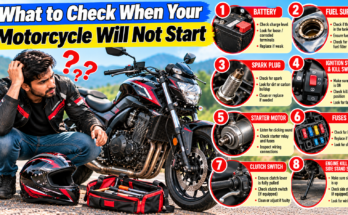
One of the most common motorcycle problems is difficulty starting the engine. Sometimes the starter motor turns slowly, while in other situations the engine cranks normally but does not actually start.
A weak battery is one of the first things I would check. Motorcycle batteries can lose their charge because of age, long periods without use, electrical problems, or poor charging. Loose or dirty battery terminals can also prevent proper electrical flow.
Fuel is another obvious possibility. If the motorcycle has very little fuel, the engine may not receive enough fuel to start properly. Fuel related problems can also occur because of a blocked fuel filter, dirty carburetor, faulty fuel pump, or injector problem.
The spark plug should also be inspected. A worn or dirty spark plug may not produce a strong enough spark for proper combustion.
The solution depends on the cause. Charging or replacing a weak battery, cleaning electrical connections, checking fuel delivery, and replacing worn spark plugs can often solve starting problems.
Motorcycle Engine Stops Suddenly
An engine that suddenly stops while riding can be more concerning because it can create a safety problem. There are several possible causes.
Running out of fuel is one simple reason. However, if there is enough fuel in the tank, the problem may involve the fuel system, electrical system, ignition system, or engine temperature.
A faulty side stand switch can sometimes cause unexpected engine shutdown. Modern motorcycles use safety switches to prevent riding with the side stand down. If the switch or its wiring becomes faulty, it may incorrectly interrupt engine operation.
Overheating can also cause the motorcycle to lose power and stop. If the temperature warning light appears or the engine becomes unusually hot, I would stop riding and allow it to cool safely.
The solution is to identify the exact cause rather than repeatedly trying to restart the motorcycle. If the engine continues to stop unexpectedly, professional inspection is recommended.
Motorcycle Is Losing Power
Loss of motorcycle power can be frustrating, especially when acceleration becomes noticeably weaker. I would first consider basic maintenance issues before assuming there is a serious engine problem.
A dirty air filter can restrict the amount of air entering the engine. The engine needs the correct mixture of air and fuel to produce power, so restricted airflow can affect acceleration.
Fuel delivery problems can also cause power loss. A blocked fuel filter, dirty injector, fuel pump problem, or carburetor issue can prevent the engine from receiving enough fuel.
Spark plug problems are another possibility. A worn spark plug can cause incomplete combustion and make the engine feel weak.
A slipping clutch can also feel like power loss. In this situation, the engine RPM may rise while the motorcycle does not accelerate as expected.
The solution depends on the symptoms. Checking the air filter, fuel system, spark plugs, clutch, and engine oil is a good starting point.
Motorcycle Overheating
Motorcycle overheating is a problem that should never be ignored. Engines naturally produce heat, but the cooling system is designed to control the temperature.
Liquid cooled motorcycles can overheat because of low coolant, coolant leaks, blocked radiators, cooling fan problems, thermostat issues, or water pump failure.
Air cooled motorcycles can also become excessively hot under demanding conditions, especially during very hot weather or prolonged slow traffic.
Low engine oil can contribute to excessive heat as well. Engine oil helps lubricate moving components and assists with heat management.
If the motorcycle starts overheating, I would move to a safe location and allow the engine to cool. I would never open a hot radiator because pressurized coolant can cause serious burns.
Repeated overheating should be investigated by a qualified mechanic.
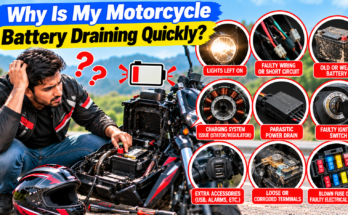
Motorcycle Battery Keeps Going Flat
A motorcycle battery that repeatedly loses its charge can indicate more than an old battery.
If the battery is relatively new but keeps going flat, there may be a charging system problem. The motorcycle’s charging system normally keeps the battery charged while the engine is running.
Problems with the alternator, regulator, rectifier, wiring, or electrical connections can prevent the battery from receiving the correct charge.
Electrical accessories can also place additional demands on the battery.
The first solution is to test the battery and charging system rather than simply replacing the battery repeatedly. If the charging system is not working correctly, a new battery may eventually become discharged as well.
Keeping battery terminals clean and secure is also important.
Motorcycle Brakes Feel Weak
Brakes are among the most important motorcycle components, so I take any change in braking performance seriously.
Weak brakes can result from worn brake pads, contaminated brake components, low brake fluid, air in the hydraulic system, damaged brake lines, or other mechanical problems.
If the brake lever feels unusually soft or the motorcycle takes longer to stop, I would avoid normal riding until the braking system has been inspected.
Brake pads should be replaced when they reach their service limit. Brake fluid should also be checked and replaced according to the manufacturer’s maintenance recommendations.
Never ignore changes in braking performance.
Motorcycle Tires Lose Pressure
Tire pressure can affect handling, braking, fuel efficiency, and tire life. A motorcycle with incorrect tire pressure may feel unstable or difficult to control.
Slow pressure loss can indicate a puncture, damaged valve, poor seal, or tire problem.
I recommend checking tire pressure regularly when the tires are cold. The correct pressure should come from the motorcycle manufacturer’s specifications rather than simply using the maximum pressure printed on the tire.
If a tire repeatedly loses pressure, it should be inspected instead of repeatedly adding air.
Motorcycle Chain Makes Noise
The chain is an important part of the motorcycle drivetrain. A chain that is too loose, too tight, dry, dirty, or worn can create noise and affect riding performance.
I recommend checking chain slack according to the manufacturer’s specifications. The chain should also be cleaned and lubricated at appropriate intervals.
If the chain has damaged links or excessive wear, replacement may be necessary.
A poorly maintained chain can also accelerate wear on the sprockets.
Motorcycle Produces Excessive Smoke
Smoke from a motorcycle exhaust can indicate a problem, although the meaning depends on the type and amount of smoke.
Blue smoke can sometimes indicate that the engine is burning oil. White smoke may be associated with moisture or, on some liquid cooled engines, coolant entering areas where it should not. Black smoke can indicate an overly rich fuel mixture.
The exact cause should be diagnosed rather than assumed.
If the motorcycle suddenly begins producing unusual amounts of smoke, I would stop and investigate the issue, particularly if there is also a loss of power or unusual engine noise.
Motorcycle Vibrates Excessively
Some vibration is normal on motorcycles, but a sudden increase in vibration can indicate a problem.
Loose components, worn tires, wheel imbalance, chain problems, engine issues, or drivetrain components can contribute to excessive vibration.
Tire condition should be checked first because tires have a direct effect on stability and handling.
If the vibration is strong or appears suddenly, professional inspection is advisable.
Motorcycle Clutch Feels Different
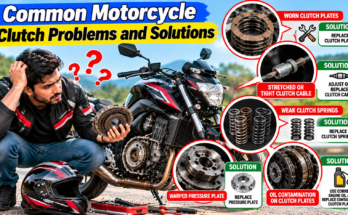
A clutch that feels unusually hard, soft, or difficult to operate can indicate a maintenance issue.
Cable operated clutches may need proper adjustment or lubrication. Hydraulic clutch systems can develop problems related to fluid, seals, or air in the system.
A slipping clutch may cause the engine RPM to increase without a matching increase in road speed.
Addressing clutch problems early can prevent additional wear and make the motorcycle easier and safer to control.
How Regular Maintenance Prevents Motorcycle Problems
From my perspective, preventive maintenance is much easier than dealing with a motorcycle breakdown.
Regularly checking engine oil, coolant, tire pressure, chain condition, battery connections, brake components, lights, and fluid levels can identify small problems before they become expensive repairs.
Following the manufacturer’s service schedule is also important. Different motorcycles have different maintenance requirements, so I prefer to use the owner’s manual as the main reference.
It is also useful to pay attention to changes in the motorcycle’s behavior. A new noise, vibration, smell, starting problem, or change in performance can provide an early warning.
When Should You Visit a Mechanic?
Some basic maintenance tasks can be handled by an experienced rider, but not every motorcycle problem should be repaired at home.
If the motorcycle has serious brake problems, repeated overheating, major oil or coolant leaks, unusual engine noises, electrical failures, or persistent loss of power, professional diagnosis is the safer option.
Trying to repair an unfamiliar system without the correct tools or knowledge can sometimes make the problem worse.

Final Thoughts
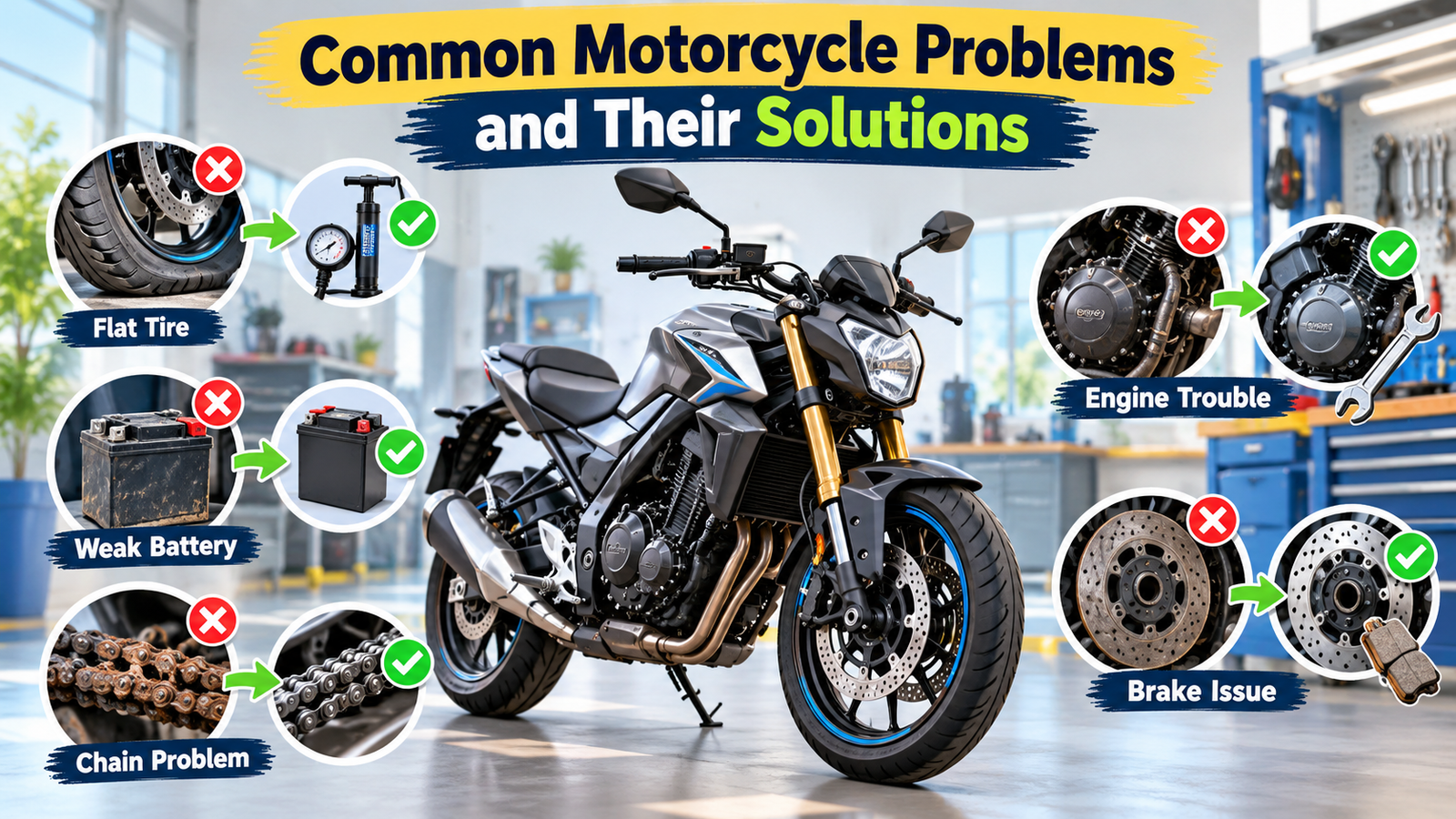
Common motorcycle problems can range from simple maintenance issues to more serious mechanical faults. Starting problems, sudden engine shutdowns, power loss, overheating, battery problems, weak brakes, tire pressure issues, chain problems, unusual smoke, excessive vibration, and clutch problems are all worth understanding.
In my opinion, the best solution is to maintain the motorcycle regularly and pay attention to small changes before they develop into major failures.
A motorcycle does not need complicated maintenance every day. Simple checks performed consistently can make a significant difference. Keeping the tires properly inflated, checking fluids, maintaining the chain, monitoring the battery, and following the recommended service schedule can help keep the motorcycle reliable.
Most importantly, safety should always come first. If a motorcycle develops a problem that affects braking, steering, engine operation, or stability, I would rather stop riding and have it inspected than take an unnecessary risk on the road.