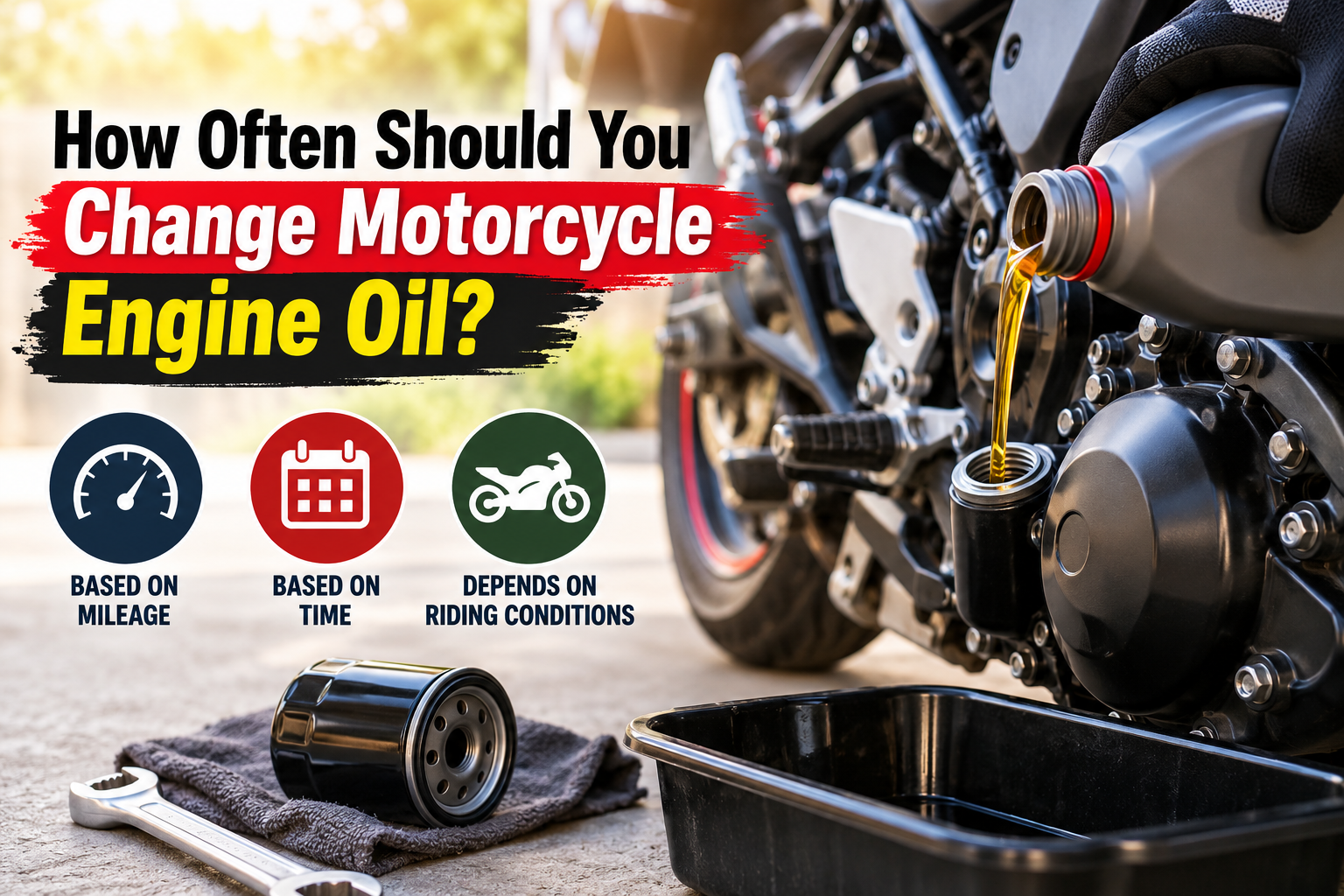
Changing motorcycle engine oil regularly is one of the most important maintenance tasks for keeping an engine healthy. Engine oil reduces friction between moving parts, helps control heat, and carries contaminants away from important engine components.
From my point of view, riders should never ignore the recommended motorcycle oil change interval. Waiting too long can allow old oil to lose some of its protective qualities and may increase engine wear.
Follow the Manufacturer’s Recommendation
The correct motorcycle oil change interval depends on the motorcycle model, engine design, oil type, and riding conditions. Some motorcycles require oil changes after a few thousand kilometers, while newer models may have longer intervals.
I always recommend checking the motorcycle owner’s manual first. The manufacturer’s recommendation should be the main guide because different engines have different requirements.
Consider Your Riding Conditions
The recommended oil change interval may not always be suitable for every riding situation. If you frequently ride in heavy traffic, extreme heat, dusty areas, or stop and go conditions, the engine may experience more stress.
Short trips can also be harder on an engine because it may not spend enough time operating at its ideal temperature.
For these reasons, I believe riders who use their motorcycles in demanding conditions should pay closer attention to the condition of their engine oil.
Choose the Correct Motorcycle Oil
Using the correct oil is just as important as changing it on time. Motorcycle engines can have specific oil viscosity and performance requirements.
Some motorcycles also use the same oil for the engine, transmission, and wet clutch. Therefore, motorcycle specific oil that meets the manufacturer’s specifications can be important.
Before purchasing oil, I recommend checking the owner’s manual for the correct viscosity and specification.
Why Old Engine Oil Can Be a Problem
Engine oil becomes contaminated as the motorcycle is used. Tiny particles, combustion byproducts, and other contaminants can enter the oil.
Over time, the oil can become less effective at protecting moving engine components. Continuing to use severely degraded oil may increase friction and wear.
This is why I consider regular oil changes a simple investment in the long term health of a motorcycle engine.
Replace the Oil Filter When Required
The oil filter helps remove contaminants from the engine oil. Depending on the motorcycle and manufacturer instructions, the filter may need to be replaced at specific service intervals.
When I change engine oil, I prefer to check whether the oil filter is also due for replacement. Fresh oil combined with a properly maintained filter provides better overall engine protection.
Check Oil Level Between Changes
An oil change does not mean you can forget about the oil until the next service. Motorcycle owners should also check the oil level regularly.
A low oil level can be caused by leaks or oil consumption. If the oil level repeatedly drops, the motorcycle should be inspected to determine the reason.
Final Thoughts
There is no single oil change interval that applies to every motorcycle. The best approach is to follow the manufacturer’s recommendation and consider your personal riding conditions.
For me, regular motorcycle oil changes are one of the easiest ways to protect the engine and maintain smooth performance. Good quality oil, the correct oil level, and timely servicing can help a motorcycle remain reliable for a long time.