The motorcycle clutch plays an important role in controlling power between the engine and rear wheel. I rely on the clutch every time I start moving, change gears, slow down, or stop. Because it is used so frequently, clutch components can eventually wear or develop problems.
A motorcycle clutch problem can appear in different ways. The clutch may slip, feel too hard, become difficult to adjust, make unusual noises, or prevent smooth gear changes. Understanding these common motorcycle clutch problems can help identify issues before they become more expensive.
Motorcycle Clutch Slipping
Clutch slipping is one of the most common clutch problems.
When the clutch slips, the engine RPM may rise without a matching increase in motorcycle speed. It can be especially noticeable during hard acceleration or when riding uphill.
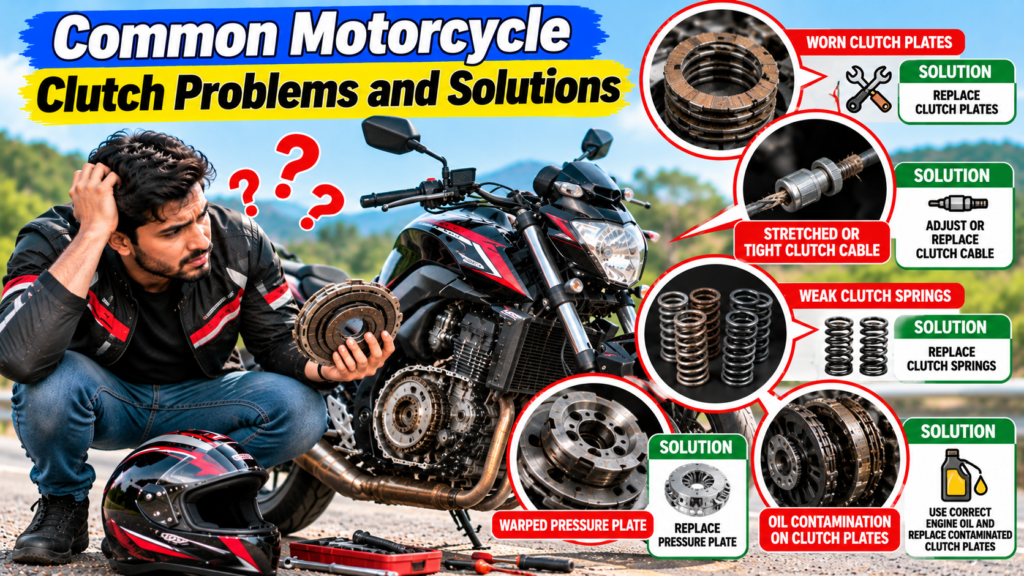
Worn clutch plates are a common cause. Incorrect clutch adjustment can also prevent the clutch from fully engaging.
If the clutch is slipping, I would have it inspected rather than continuing to ride aggressively. Continued slipping can create additional heat and accelerate clutch wear.
Clutch Feels Too Hard
A motorcycle clutch lever that suddenly becomes difficult to pull can make riding uncomfortable.
On cable operated systems, a dry, damaged, or incorrectly routed clutch cable can increase resistance.
The clutch mechanism itself can also develop problems.
I would inspect the cable condition and follow the manufacturer’s recommendations for adjustment and lubrication where applicable.
If the clutch remains unusually hard after basic maintenance, professional inspection may be necessary.
Clutch Lever Feels Too Loose
A clutch lever with excessive free play can affect clutch operation.
Some amount of free play is normally required, but too much can prevent the clutch from disengaging properly.
The result can be difficult gear changes or motorcycle movement when the clutch is pulled in.
Clutch free play should be adjusted according to the motorcycle manufacturer’s specifications.
Motorcycle Is Difficult to Shift
A motorcycle that becomes difficult to shift may have a clutch related problem, although the transmission itself can also be involved.
If the clutch does not disengage completely, changing gears can become difficult.
Incorrect clutch adjustment, cable problems, hydraulic system issues, or worn clutch components can all contribute.
Engine oil can also matter because many motorcycle clutches operate in an oil environment. Using the correct oil specification is important.
Motorcycle Moves Forward With Clutch Pulled In
If the motorcycle tries to move even when the clutch lever is fully pulled in, the clutch may not be disengaging completely.
This condition is sometimes called clutch drag.
Possible causes include incorrect adjustment, cable problems, hydraulic issues, warped clutch components, or other mechanical faults.
This problem should be addressed because it can make stopping and shifting more difficult.
Clutch Makes Unusual Noise
Some clutch noise can be normal depending on the motorcycle design, but a sudden change in sound deserves attention.
A rattling, grinding, or unusual mechanical noise may come from clutch components or nearby parts.
The exact cause can be difficult to identify without inspection.
If the noise is accompanied by slipping, difficult shifting, vibration, or other changes, I would have the clutch checked.
Hydraulic Clutch Problems
Some motorcycles use hydraulic clutch systems instead of cables.
Hydraulic systems depend on proper fluid levels, seals, and pressure.
Air in the system, leaking fluid, worn seals, or contaminated fluid can cause changes in clutch operation.
A soft or inconsistent clutch lever can be a warning sign.
Hydraulic clutch systems should be maintained according to the manufacturer’s service instructions.
Worn Clutch Plates
Clutch plates naturally wear over time.
The rate of wear depends on riding style, traffic conditions, motorcycle design, and maintenance.
Frequent slipping, heavy traffic, carrying heavy loads, and aggressive starts can increase clutch wear.
When the plates reach their service limit, replacement may be required.
Incorrect Clutch Adjustment
Correct adjustment is essential for cable operated motorcycle clutches.
Too little or too much free play can affect how the clutch engages and disengages.
I recommend using the manufacturer’s specifications rather than adjusting the clutch based only on how it feels.
A correctly adjusted clutch should allow smooth operation without excessive slipping or dragging.
Wrong Engine Oil
Many motorcycles use a wet clutch, meaning the clutch operates in the same oil environment as the engine.
Using an unsuitable oil can sometimes contribute to clutch performance problems.
I always recommend using engine oil that meets the motorcycle manufacturer’s specifications.
This is particularly important when selecting oil for motorcycles with wet clutches.
How to Prevent Motorcycle Clutch Problems
Regular maintenance can help extend clutch life.
I recommend checking clutch free play, maintaining the clutch cable when applicable, using the correct engine oil, and paying attention to changes in clutch behavior.
Avoiding unnecessary clutch slipping is also important.
When stopped for a long period, it is generally better to use neutral rather than continuously holding the clutch lever, when safe and appropriate.
When Should You Replace the Clutch?
A clutch may need replacement when components have reached their wear limits or when adjustment can no longer correct slipping or other problems.
A mechanic can inspect the clutch plates and related components to determine whether replacement is necessary.
Replacing only one component may not always be enough if other clutch parts are also worn.
Final Thoughts
Common motorcycle clutch problems include slipping, dragging, difficult shifting, unusual noises, hard clutch levers, excessive free play, and hydraulic system problems.
From my point of view, the most important thing is to pay attention to changes in clutch behavior. A clutch that gradually becomes harder to operate or starts slipping is giving the rider useful information.
Early inspection can prevent additional wear and help keep the motorcycle smooth and predictable. Proper adjustment, suitable engine oil, regular maintenance, and good riding habits can all help extend clutch life.