A motorcycle battery is one of the most important electrical components on a motorcycle. I usually do not think much about the battery when everything is working normally, but when the motorcycle suddenly refuses to start, the battery becomes the first thing I want to check. If a motorcycle battery is draining quickly, there is usually an underlying reason that needs to be identified.
A healthy motorcycle battery should hold enough charge to start the engine and power the electrical system. If the battery keeps going flat after a short period, simply charging it again may only provide a temporary solution. In my opinion, it is better to understand why the battery is losing power in the first place.
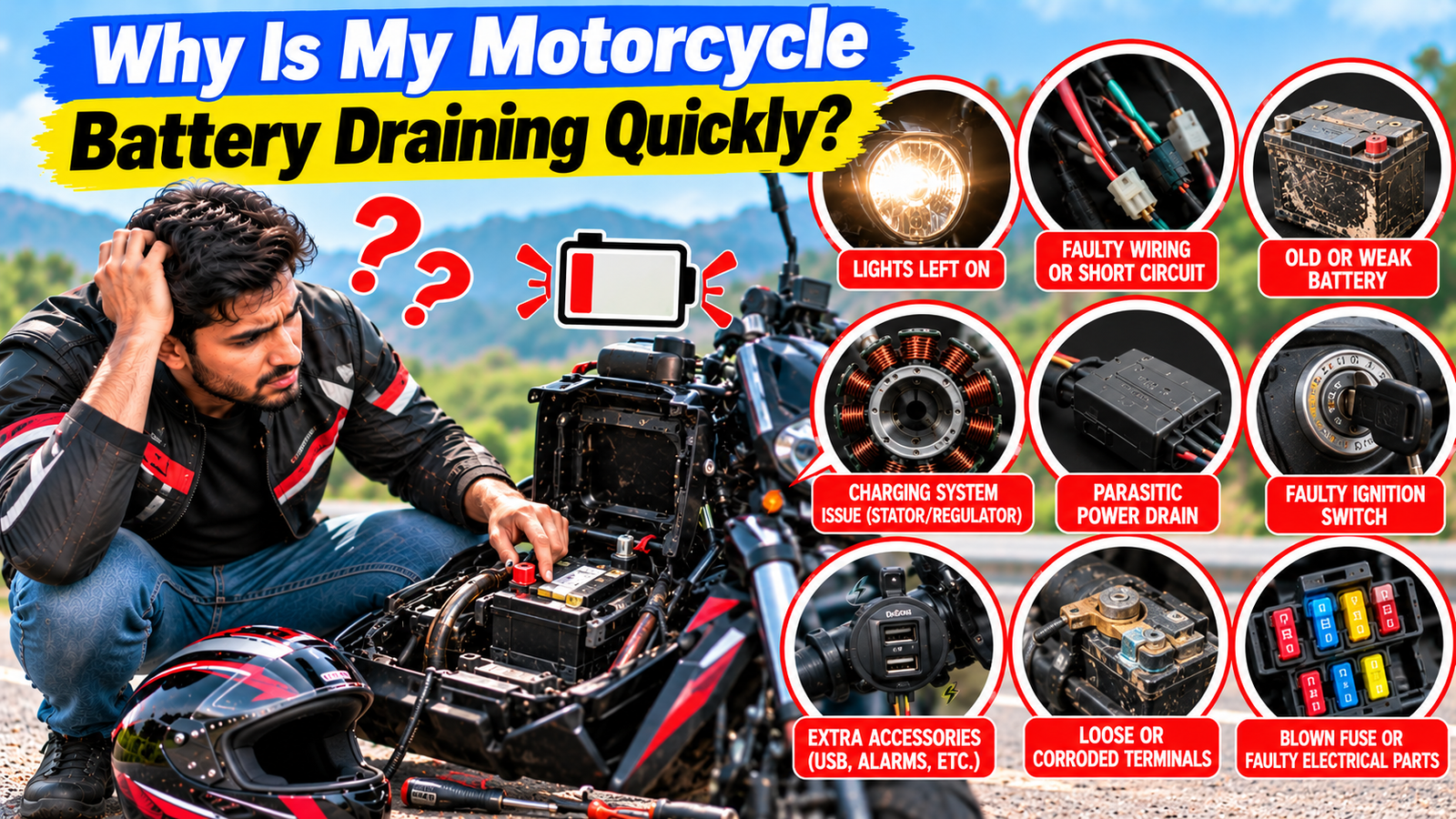
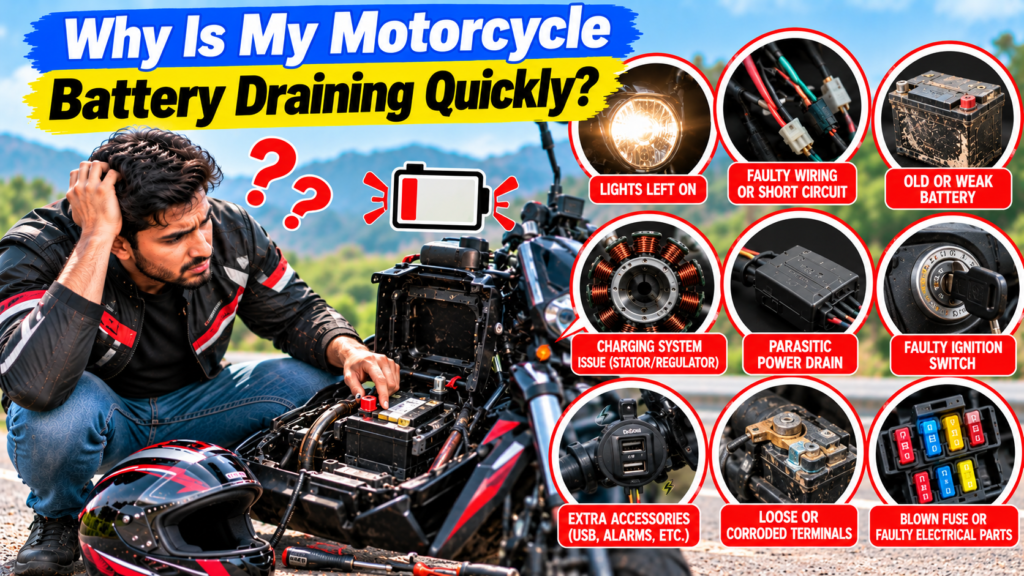
There are several common reasons for a motorcycle battery draining quickly. These include an old battery, charging system problems, loose battery connections, electrical accessories, parasitic electrical drain, infrequent riding, and problems with the motorcycle’s electrical system.
An Old Motorcycle Battery
One of the most common reasons for a motorcycle battery draining quickly is its age.
Like other batteries, motorcycle batteries gradually lose their ability to store electrical energy. Even if the battery appears to charge normally, an older battery may not be able to hold that charge for very long.
I would especially suspect the battery if it has been used for a long time and the motorcycle has recently started becoming difficult to start.
An old battery may show several warning signs. The starter motor may turn slowly, the headlights may become weaker when starting, or the motorcycle may only start after using an external charger.
The best solution is to have the battery tested. If it cannot hold a proper charge, replacing it may be necessary.
However, I would not replace the battery immediately without checking the charging system. A new battery can also drain quickly if another electrical problem is responsible.
Motorcycle Charging System Problems
The charging system is responsible for restoring electrical energy to the battery while the motorcycle is running.
If the charging system is not working correctly, the battery can gradually become discharged even though the motorcycle starts and runs normally at first.
Important charging system components include the stator, regulator, rectifier, wiring, and electrical connections.
A faulty stator may not produce enough electrical power. A regulator or rectifier problem can also prevent the battery from receiving the correct charging voltage.
This is one reason I recommend testing the charging system when a motorcycle battery repeatedly goes flat.
Simply charging the battery every few days will not solve the problem if the motorcycle is not charging it properly while running.
Loose or Dirty Battery Terminals
Battery terminals need to maintain a clean and secure connection.
Over time, dirt or corrosion can build up around the terminals. A loose terminal can also create an inconsistent electrical connection.
These problems can cause starting difficulties and may affect how the motorcycle’s electrical system operates.
I recommend checking the battery terminals during routine motorcycle maintenance. They should be clean and securely connected.
If there is visible corrosion, it should be cleaned using a safe procedure recommended for the battery and motorcycle.
It is also important to inspect the cables connected to the battery. A damaged or loose cable can create electrical problems that are easy to overlook.
Motorcycle Is Not Used Often
A motorcycle that sits unused for long periods can experience battery drainage.
Even when the motorcycle is switched off, certain electrical systems may continue using a small amount of power. Depending on the motorcycle, this can include the clock, alarm system, immobilizer, or other electronic components.
If the motorcycle remains parked for several weeks, the battery may gradually become discharged.
I think this is particularly important for riders who use their motorcycles only occasionally.
If a motorcycle is going to remain unused for an extended period, a suitable battery maintainer can help keep the battery at an appropriate charge level.
Short Motorcycle Trips
Short trips can also contribute to battery problems.
Starting the motorcycle uses electrical energy. The charging system then needs time to replace the energy used during starting.
If I start the motorcycle, ride for only a few minutes, and then turn it off, the charging system may not have enough time to restore the battery fully.
Repeating this pattern can gradually reduce the battery’s charge.
This does not mean every motorcycle needs to be ridden for a long time after starting. It simply shows why frequent very short trips can sometimes contribute to battery discharge.
Aftermarket Electrical Accessories
Many motorcycle riders install additional electrical equipment.
Examples include phone chargers, auxiliary lights, heated grips, GPS devices, alarms, speakers, and other accessories.
These accessories can increase the electrical load on the motorcycle. If an accessory is wired incorrectly or continues drawing power when the motorcycle is turned off, it can drain the battery.
If the battery started draining quickly after installing an accessory, I would investigate that accessory first.
Professional installation is important because electrical accessories need to be connected correctly to prevent unwanted battery drain.
Parasitic Battery Drain
A parasitic drain happens when an electrical component continues consuming more power than expected after the motorcycle has been switched off.
This can be caused by faulty wiring, an aftermarket alarm, a relay, electronic equipment, a damaged switch, or another electrical component.
A parasitic drain can be difficult to identify because the motorcycle may appear completely switched off.
One common clue is a battery that becomes weak after the motorcycle sits overnight or for a few days.
If the battery is known to be healthy and the charging system is working correctly, an electrical technician can test the motorcycle for unwanted current draw.
Cold Weather Can Affect the Battery
Temperature can influence battery performance.
Cold weather can make it harder for the battery to deliver the power needed to start the engine. A weak or aging battery may become especially unreliable in cold conditions.
If the motorcycle starts normally in warm weather but struggles when temperatures drop, the battery condition should be considered.
Cold weather may not be the actual cause of a battery fault, but it can expose a battery that was already becoming weak.
Repeated Starting Attempts
A motorcycle battery can drain quickly when the engine refuses to start and the rider repeatedly uses the starter motor.
The starter requires a significant amount of electrical power. If I continue pressing the starter button without finding the reason the motorcycle will not start, the battery can eventually become too weak.
Starting problems may actually be caused by fuel delivery, spark plugs, ignition, or another issue rather than the battery itself.
For this reason, I avoid repeated starting attempts when the motorcycle clearly has another problem.
Engine Problems Can Look Like Battery Problems
Sometimes the battery is blamed when the actual problem is somewhere else.
For example, if the motorcycle has a fuel system problem, the engine may crank but fail to start. After repeated attempts, the battery becomes discharged.
In this situation, replacing the battery will not solve the original starting problem.
This is why I think it is important to pay attention to what happens when the starter button is pressed.
If the starter turns the engine normally but the engine does not start, the problem may involve fuel, air, or ignition rather than the battery.
If the starter barely turns or only clicks, the battery or electrical system becomes more likely.
How to Check a Motorcycle Battery
A basic visual inspection is a useful starting point.
I would check the battery terminals, cables, and surrounding area for corrosion, damage, or loose connections.
A battery tester or multimeter can provide more useful information than simply looking at the battery.
Voltage testing can help determine whether the battery has sufficient charge, while additional testing can help determine whether the battery can actually deliver the required starting power.
The charging system should also be tested while the motorcycle is running.
For accurate results, I recommend following the motorcycle manufacturer’s specifications rather than relying on a generic voltage number.
How to Prevent Motorcycle Battery Drain
Preventive maintenance can make a significant difference.
I recommend keeping the battery terminals clean and secure, following the motorcycle manufacturer’s maintenance schedule, checking the charging system when necessary, and avoiding unnecessary electrical accessories.
If the motorcycle will be stored for an extended period, proper battery storage or a suitable maintenance charger can help.
It is also useful to pay attention to early warning signs.
If the starter begins turning more slowly than normal or the motorcycle becomes difficult to start after sitting for a short period, I would have the battery checked before it completely fails.
When Should You Replace the Battery?
A motorcycle battery should be replaced when it is damaged, unable to hold a charge, or has reached the end of its useful service life.
However, I would not replace the battery repeatedly without investigating the reason it is draining.
If a charging system fault or parasitic electrical drain is present, even a brand new battery may eventually become discharged.
Testing the battery, charging system, and electrical system together gives a much better understanding of the problem.
Final Thoughts
A motorcycle battery draining quickly can be caused by several different issues. An old battery, faulty charging system, loose terminals, electrical accessories, parasitic drain, infrequent riding, short trips, and repeated starting attempts can all contribute to battery problems.
From my point of view, the most important thing is to find the actual cause rather than repeatedly charging or replacing the battery.
Regular motorcycle maintenance can help prevent unexpected battery failure. Checking the battery connections, maintaining the charging system, using electrical accessories correctly, and taking care of the motorcycle when it is stored can all improve battery reliability.
If the battery repeatedly becomes weak even after charging, I would have the motorcycle professionally tested. A proper diagnosis can identify whether the battery itself is failing or whether another part of the electrical system is responsible.
A healthy battery and properly working charging system are essential for reliable motorcycle starting, so addressing battery problems early is always a good idea.