
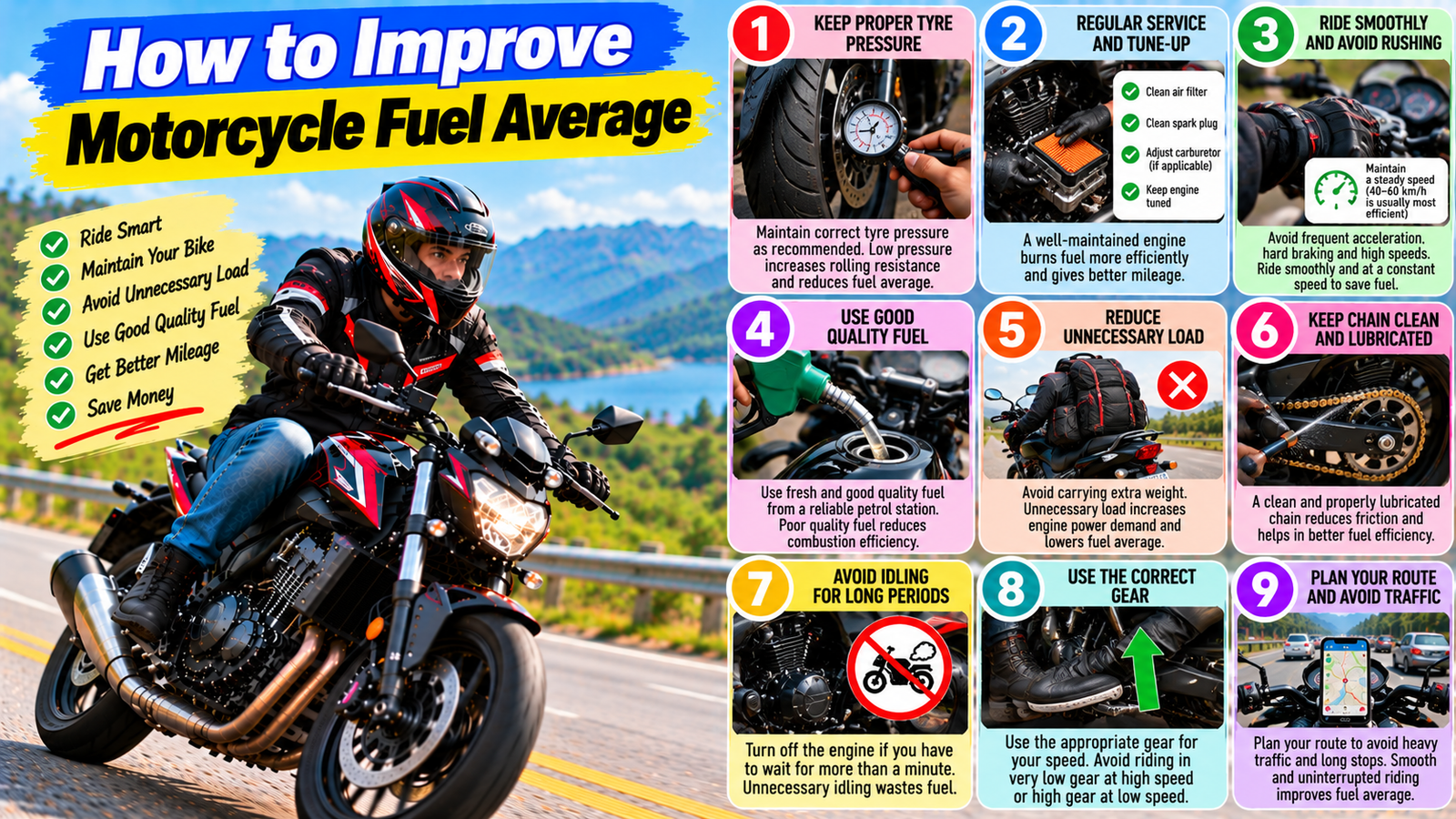
Improving motorcycle fuel average is something I believe every rider should pay attention to. Fuel is one of the regular expenses of owning a motorcycle, and small changes in riding habits can make a noticeable difference over time. A motorcycle that gives better fuel mileage is not only cheaper to operate but can also be more convenient for daily commuting and longer trips.
Many riders immediately think that buying a different motorcycle is the only way to improve fuel average. In my experience, that is not always necessary. The condition of the motorcycle, riding style, tire pressure, traffic, maintenance, fuel quality, and even the weight being carried can all affect how much fuel the motorcycle uses.
Maintain the Motorcycle Properly
The first step I recommend for improving motorcycle fuel average is keeping the motorcycle properly maintained.
A poorly maintained motorcycle may require more fuel because the engine and other components are not operating as efficiently as they should.
Regularly check the engine oil, air filter, spark plug, chain, tires, brakes, and other components according to the manufacturer’s maintenance schedule.
A clean air filter allows the engine to receive the air it needs. A neglected filter can affect engine performance and may contribute to poor fuel economy.
The spark plug is also important because it plays a key role in combustion. If it is worn or damaged, the engine may not run as efficiently.
Keep the Tires Properly Inflated
Tire pressure is another simple factor that can affect motorcycle fuel consumption.
When tires are significantly underinflated, the motorcycle may experience greater rolling resistance. This can make the engine work harder.
I recommend checking tire pressure regularly and keeping it at the level specified by the motorcycle manufacturer.
Do not simply use the maximum pressure printed on the tire as your target. Follow the motorcycle manufacturer’s recommended pressure for your riding conditions.
Check the tires when they are cold whenever possible for a more consistent reading.
Use Smooth Throttle Control
Your riding style has a major effect on fuel average.
Rapid acceleration and aggressive throttle inputs can increase fuel consumption.
I prefer smooth acceleration because it makes the ride more comfortable and can also help improve fuel economy.
This does not mean you should ride dangerously slowly. It means avoiding unnecessary bursts of acceleration when normal, controlled acceleration is enough.
Smooth throttle control also helps make your motorcycle easier to manage in traffic.
Avoid Unnecessary High Speeds
Higher speeds can increase fuel consumption because aerodynamic resistance becomes more significant.
If you regularly ride at very high speeds, your motorcycle may use considerably more fuel than it would at a moderate speed.
I recommend following posted speed limits and choosing a speed that is appropriate for traffic and road conditions.
Better fuel economy should never be achieved by riding below a safe speed or interfering with normal traffic flow.
Maintain a Steady Riding Style
Frequent acceleration and braking can reduce fuel efficiency.
For example, accelerating quickly toward a traffic signal and then braking hard wastes energy.
When traffic conditions allow, I prefer looking ahead and adjusting my speed smoothly.
This can help reduce unnecessary acceleration and braking while also making the ride more relaxed.
Always remember that safety comes first. You should never coast or delay braking simply to save fuel.
Reduce Unnecessary Weight
Carrying unnecessary weight can affect fuel consumption.
If you have heavy bags or accessories that you do not need, removing them may help reduce the load on the motorcycle.
For daily commuting, I recommend carrying only what is actually necessary.
However, do not remove important safety equipment or tools simply to reduce weight.
The goal is sensible weight management, not making the motorcycle as light as possible.
Check the Chain
The motorcycle chain should be maintained according to the manufacturer’s recommendations.
A chain that is dirty, excessively loose, excessively tight, or poorly lubricated can affect how power is transferred to the rear wheel.
Regular chain inspection and maintenance can help the motorcycle operate properly.
If you are unsure about the correct chain adjustment, have it checked by a qualified mechanic.
Avoid Excessive Idling
Leaving the motorcycle running while parked uses fuel without moving the motorcycle.
If you are waiting somewhere for an extended period and local conditions allow it, shutting the engine off may save fuel.
However, do not repeatedly turn the motorcycle off and on in situations where doing so could create a safety problem.
Use common sense and follow your motorcycle manufacturer’s recommendations.
Plan Your Routes
Route planning can also help improve motorcycle fuel average.
A route with constant traffic jams, repeated stops, and poor road conditions may consume more fuel than a smoother route.
When practical, choose a route that provides a reasonable balance between distance, traffic, road quality, and safety.
Do not take a significantly longer or less safe route just to save a small amount of fuel.
Avoid Aggressive Riding
Aggressive riding can increase fuel consumption and place additional stress on the motorcycle.
Hard acceleration, high engine speeds, sudden braking, and rapid changes in speed can all contribute to increased fuel use.
A calm and predictable riding style is usually better for both fuel economy and safety.
Use the Correct Engine Oil
Using the correct engine oil is important for proper engine operation.
I recommend following the motorcycle manufacturer’s specifications rather than choosing oil simply because it is inexpensive or popular.
The correct oil grade and specification can help the engine operate as intended.
Oil should also be changed according to the manufacturer’s recommended service interval.
Do Not Ignore Warning Signs
A sudden decrease in fuel average can sometimes indicate a mechanical problem.
If your motorcycle suddenly begins using much more fuel than usual, look for possible causes.
Problems with the air intake, spark plug, fuel system, brakes, tires, engine, or sensors on electronically controlled motorcycles can affect fuel consumption.
If the change is significant and continues after basic checks, have the motorcycle inspected.
Track Your Fuel Consumption
One of the best ways to understand your motorcycle’s fuel economy is to track it.
Fill the tank and record the mileage. After riding and refueling, compare the distance traveled with the amount of fuel used.
Doing this regularly can help you notice changes.
If your motorcycle normally provides consistent fuel economy and suddenly becomes much less efficient, that can be a useful warning that something needs attention.
Avoid Unnecessary Modifications
Some aftermarket modifications can affect fuel consumption.
Changes to the exhaust, air intake, engine tuning, tires, or electrical systems may change how the motorcycle operates.
If you modify your motorcycle, understand how the modification may affect performance, reliability, emissions, and fuel economy.
Final Thoughts
Improving motorcycle fuel average does not always require expensive changes. In many cases, simple habits can make a difference.
I recommend keeping the motorcycle maintained, checking tire pressure, using smooth throttle control, avoiding unnecessary high speeds, reducing unnecessary weight, maintaining the chain, planning sensible routes, and tracking fuel consumption.
The most important point is to remember that fuel economy should never come at the cost of safety.
A motorcycle that is properly maintained and ridden smoothly can often provide a better balance of performance, comfort, reliability, and fuel economy. Small improvements in daily riding habits can add up over time, making every ride more economical and enjoyable.

