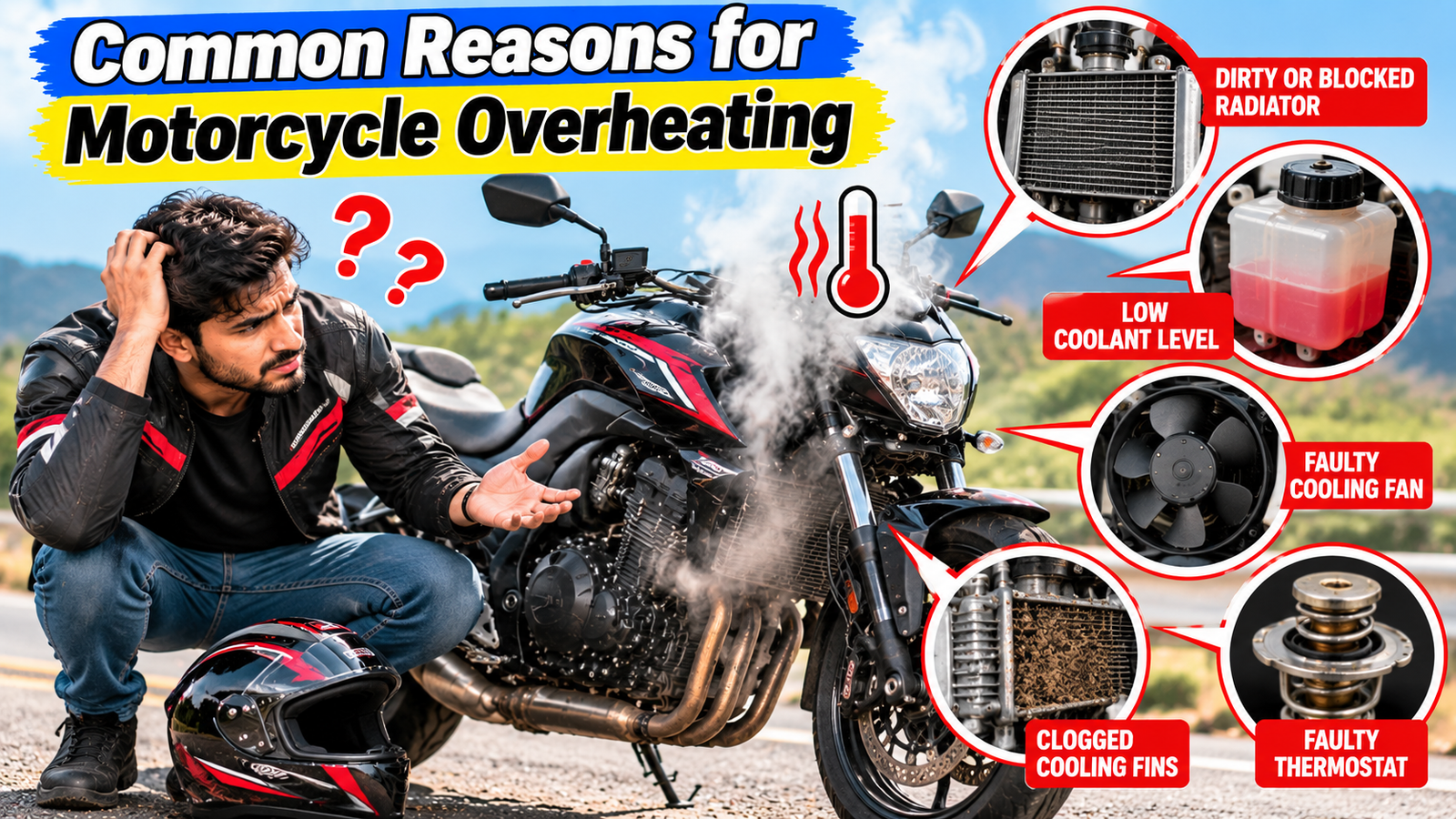
Motorcycle overheating is a problem that should never be ignored. A motorcycle engine naturally produces a significant amount of heat, but the cooling system is designed to keep temperatures within a safe operating range. When something goes wrong with that system, the engine can become excessively hot.
I believe understanding the common reasons for motorcycle overheating is important for every rider. Recognizing the warning signs early can help prevent expensive engine damage and keep the motorcycle reliable.
Low Coolant Level
For liquid cooled motorcycles, low coolant is one of the first things I would check when overheating occurs.
Coolant absorbs heat from the engine and carries it toward the radiator, where the heat can be released.
A low coolant level can result from a leak, poor maintenance, or other cooling system problems.
I recommend checking the coolant level according to the motorcycle manufacturer’s instructions. The engine should be cool before opening any cooling system component.
Coolant Leaks
A coolant leak can quickly lead to overheating.
Leaks may occur around hoses, clamps, the radiator, water pump, seals, or other components.
Sometimes a leak is easy to notice because coolant appears underneath the motorcycle. Other leaks may be small and harder to identify.
If the coolant level keeps dropping, simply adding more coolant is not a complete solution. The source of the leak should be found and repaired.
Blocked Radiator
The radiator needs proper airflow to remove heat from the coolant.
Dirt, insects, mud, leaves, and road debris can accumulate around the radiator and reduce airflow.
I recommend keeping the radiator clean while avoiding aggressive cleaning methods that could damage the delicate fins.
Bent or damaged radiator fins can also reduce cooling performance.
Cooling Fan Problems
Many liquid cooled motorcycles use an electric cooling fan to increase airflow when the motorcycle is moving slowly or stopped.
If the cooling fan does not operate when it should, the engine may become excessively hot during traffic or at low speeds.
A failed fan motor, sensor, fuse, relay, or wiring problem can prevent the fan from working correctly.
If the motorcycle overheats mainly when sitting in traffic but performs normally at higher speeds, the cooling fan deserves attention.
Thermostat Problems
Some motorcycles use a thermostat to regulate coolant flow.
If the thermostat becomes stuck or fails to operate correctly, coolant may not circulate through the system as intended.
This can contribute to overheating.
Because the thermostat is part of the cooling system, proper diagnosis is important before replacing components.
Water Pump Problems
The water pump helps circulate coolant through the engine and radiator.
If the pump fails or becomes damaged, coolant circulation can be reduced.
A motorcycle with a water pump problem may experience rising engine temperature, coolant leaks, unusual noises, or other symptoms.
A mechanic should inspect the cooling system if water pump failure is suspected.
Low Engine Oil
Engine oil does more than lubricate moving parts. It also helps carry heat away from certain engine components.
If the oil level is too low, friction and heat can increase.
That is why I consider regular oil level checks an important part of motorcycle maintenance.
The correct oil type and quantity should always follow the manufacturer’s specifications.
Riding in Heavy Traffic
Sometimes overheating is related to riding conditions rather than a mechanical failure.
Motorcycles receive less natural airflow when sitting in slow moving traffic. The cooling fan has to work harder to maintain temperature.
Hot weather can make this situation even more challenging.
If the motorcycle normally runs at a stable temperature while moving but gets hotter during long periods of stopped traffic, the riding conditions may be contributing to the problem.
Engine Running Too Lean
An incorrect fuel mixture can contribute to excessive engine heat.
A lean condition means the engine is receiving too much air compared with the amount of fuel available for combustion.
Fuel injection problems, intake leaks, sensor problems, or modifications can contribute to an incorrect mixture.
This type of issue generally requires proper diagnosis rather than simply adding or changing parts.
Warning Signs of Motorcycle Overheating
There are several signs that can indicate overheating.
The temperature gauge may rise above its normal range. A warning light may appear. The cooling fan may run more frequently. The motorcycle may lose power or begin running differently.
In severe situations, you may notice steam, coolant leakage, unusual smells, or other obvious signs of excessive heat.
If these symptoms occur, continuing to ride can increase the risk of serious engine damage.
What to Do When a Motorcycle Overheats
If my motorcycle begins overheating, I would look for a safe place to stop and allow the engine to cool.
I would not immediately open a hot radiator cap because pressurized coolant can cause serious burns.
Once the motorcycle has cooled sufficiently, the coolant level and visible signs of leakage can be checked.
If the motorcycle overheats repeatedly, I would avoid continuing to ride it until the cooling system has been properly inspected.
How to Prevent Motorcycle Overheating
Preventive motorcycle maintenance can significantly reduce overheating problems.
I recommend checking coolant levels, inspecting hoses, keeping the radiator clean, checking engine oil, and following the manufacturer’s service schedule.
It is also useful to pay attention to changes in temperature behavior.
A motorcycle that starts running hotter than normal may be showing an early warning sign even if it has not overheated yet.
Final Thoughts
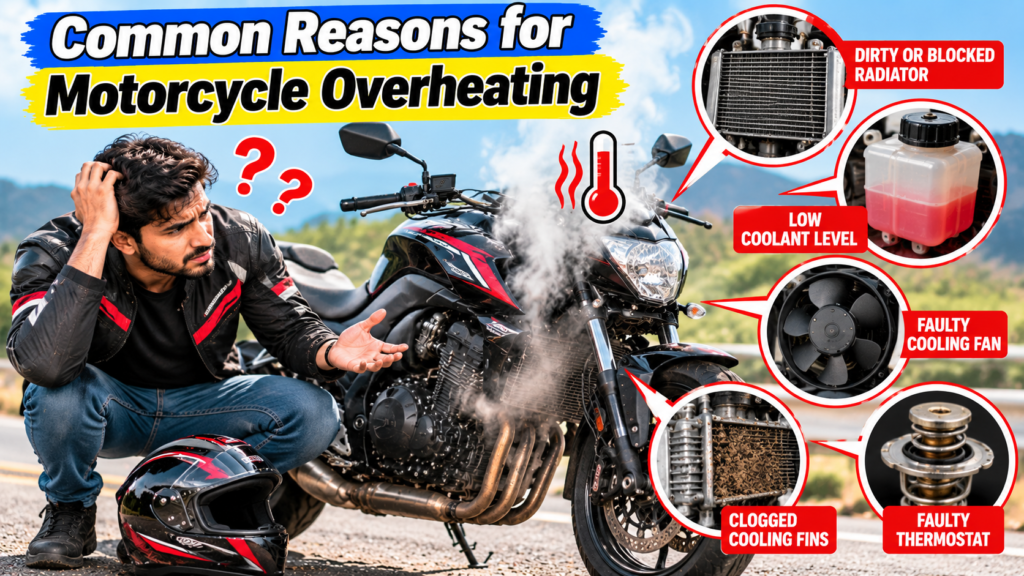
Motorcycle overheating can have several causes, including low coolant, coolant leaks, radiator blockage, cooling fan problems, thermostat failure, water pump issues, low engine oil, and demanding riding conditions.
From my point of view, the most important thing is to treat overheating seriously. An engine that becomes too hot can suffer expensive damage if the problem is ignored.
Regular motorcycle maintenance and early diagnosis can help prevent many cooling system problems. If overheating continues after basic checks, professional inspection is the safest approach.
A well maintained cooling system helps the engine operate efficiently and gives me much more confidence during everyday riding and longer trips.