Motorcycle engines naturally make noise, but I always pay attention when the sound suddenly changes. A new ticking, knocking, rattling, buzzing, or grinding noise can sometimes be a simple maintenance issue, while other sounds may indicate a more serious mechanical problem.
Learning to recognize unusual motorcycle engine noises is useful because early attention can prevent a small problem from becoming expensive engine damage. The important thing is to notice when the sound started, whether it changes with engine speed, and whether it appears together with other symptoms.
Normal Motorcycle Engine Noise
Before identifying an unusual noise, it helps to understand what normal engine sound is like.
Every motorcycle has its own sound depending on the engine design, exhaust system, transmission, and other components. Some engines are naturally louder than others.
What matters most to me is a noticeable change from the motorcycle’s normal sound.
If the motorcycle suddenly develops a sound that was not present before, I would investigate it rather than assuming it is normal.
Ticking or Clicking Noise
A light ticking or clicking sound can come from several areas of the engine.
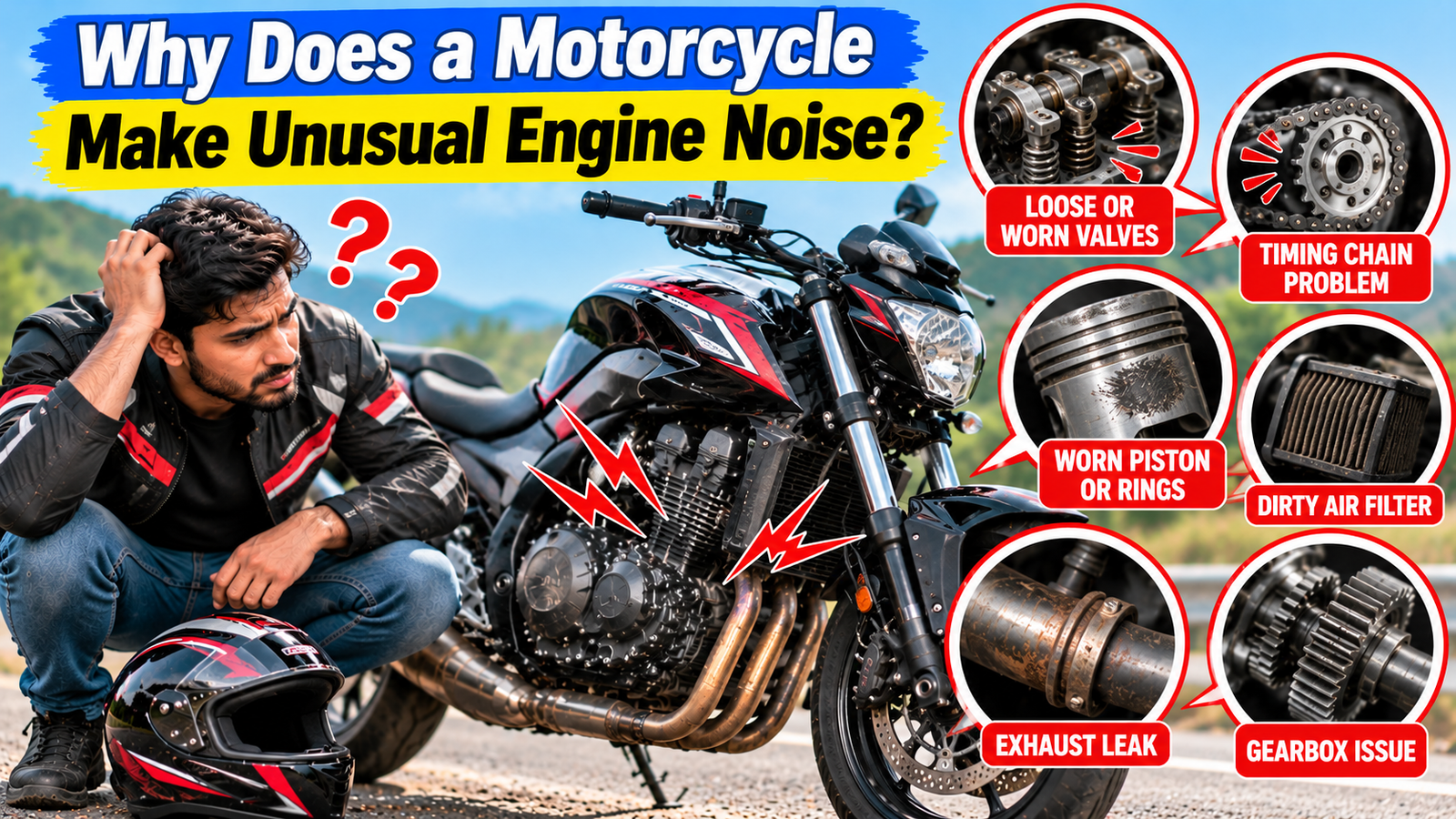
Valve train components can create ticking noises, particularly if valve clearances are outside the recommended specification.
A low engine oil level can also contribute to unusual mechanical sounds because engine components depend on proper lubrication.
If I notice a new ticking noise, I would first check the engine oil level according to the manufacturer’s instructions.
If the noise continues, a mechanic may need to inspect the valve train and other internal components.
Knocking Sound
A deep knocking sound is something I would take seriously.
Engine knocking can have several possible causes, including combustion problems, lubrication problems, worn internal components, or other mechanical faults.
The exact sound can be difficult to diagnose without experience, so I would not continue riding aggressively if a strong knocking sound suddenly appears.
Checking the oil level is a reasonable first step, but persistent knocking should be professionally inspected.
Rattling Noise
A rattling sound may come from inside or outside the engine.
Loose exhaust components, body panels, heat shields, brackets, or other motorcycle parts can create rattling noises that sound like engine problems.
Inside the engine, timing components or other moving parts can also produce rattling.
I prefer to determine whether the sound changes with engine RPM. If the noise appears only at certain engine speeds, that can provide a useful clue.
Grinding Noise
Grinding sounds should not be ignored.
A grinding noise can potentially come from mechanical components that are not moving correctly or are experiencing excessive wear.
Depending on when the noise occurs, the source could involve the engine, clutch, transmission, starter system, or another component.
If grinding is accompanied by difficulty shifting, loss of power, or other serious symptoms, I would stop riding and arrange for professional inspection.
Engine Noise During Cold Starting
Some motorcycles may sound different immediately after starting from cold.
Engine oil needs time to circulate, and mechanical components can produce slightly different sounds during the first moments of operation.
However, a loud or persistent noise should not automatically be considered normal just because the engine is cold.
If the noise disappears after a few seconds but becomes more frequent or louder over time, I would still have it checked.
Low Engine Oil
Low oil is one of the most important basic checks when unusual engine noise appears.
Engine oil lubricates moving components and helps control heat. If the oil level becomes too low, friction and mechanical noise can increase.
I recommend checking the oil level regularly according to the motorcycle manufacturer’s procedure.
Using the correct oil grade is also important because different motorcycle engines have specific lubrication requirements.
Loose Exhaust Components
Not every unusual motorcycle noise comes from the engine itself.
A loose exhaust shield, bracket, mounting bolt, or exhaust component can create a metallic rattle that sounds like an internal engine problem.
This is why I would inspect the motorcycle visually before assuming that the engine needs major repairs.
Any loose component should be repaired properly rather than simply ignored.
Timing Chain Noise
The engine’s timing system controls the relationship between internal components such as the camshaft and crankshaft.
A problem with timing components can produce unusual rattling or mechanical noises.
Timing chain tension and related components can wear over time.
Because timing is critical to engine operation, unusual timing related noise should be checked by someone with the appropriate knowledge and tools.
Noise That Changes With RPM
One useful observation is whether the noise changes as engine speed changes.
If the noise becomes faster or louder as RPM increases, it may be related to a rotating engine component.
If the noise occurs only under acceleration, it may provide different clues than a noise that occurs while the motorcycle is stationary.
I find it useful to remember exactly when the noise happens rather than simply describing the motorcycle as noisy.
When Should You Stop Riding?
Some motorcycle noises should be treated as warning signs.
A loud knocking sound, grinding noise, sudden mechanical rattle, oil warning light, severe vibration, smoke, or significant power loss can indicate a serious issue.
If several symptoms appear together, continuing to ride could increase damage.
From my point of view, stopping early is usually better than turning a repairable problem into a major engine rebuild.
How Regular Maintenance Helps
Regular motorcycle maintenance can reduce many causes of unusual engine noise.
Checking engine oil, changing oil and filters at the recommended intervals, inspecting the chain, checking valve clearances when required, and keeping mounting components secure can all help.
Following the manufacturer’s maintenance schedule is especially important for internal engine components.
Final Thoughts
Unusual motorcycle engine noise can have many causes. Some are simple, such as a loose exhaust component or low oil level, while others can involve important internal engine components.
I believe the key is to notice changes early. A motorcycle rider knows how their machine normally sounds, so a new noise should not be ignored.
Checking the basic maintenance items is a sensible first step. If the sound is loud, persistent, or accompanied by warning lights, overheating, smoke, vibration, or loss of power, professional diagnosis is the safer choice.
Early attention can help protect the engine and potentially save a significant amount of money on repairs.