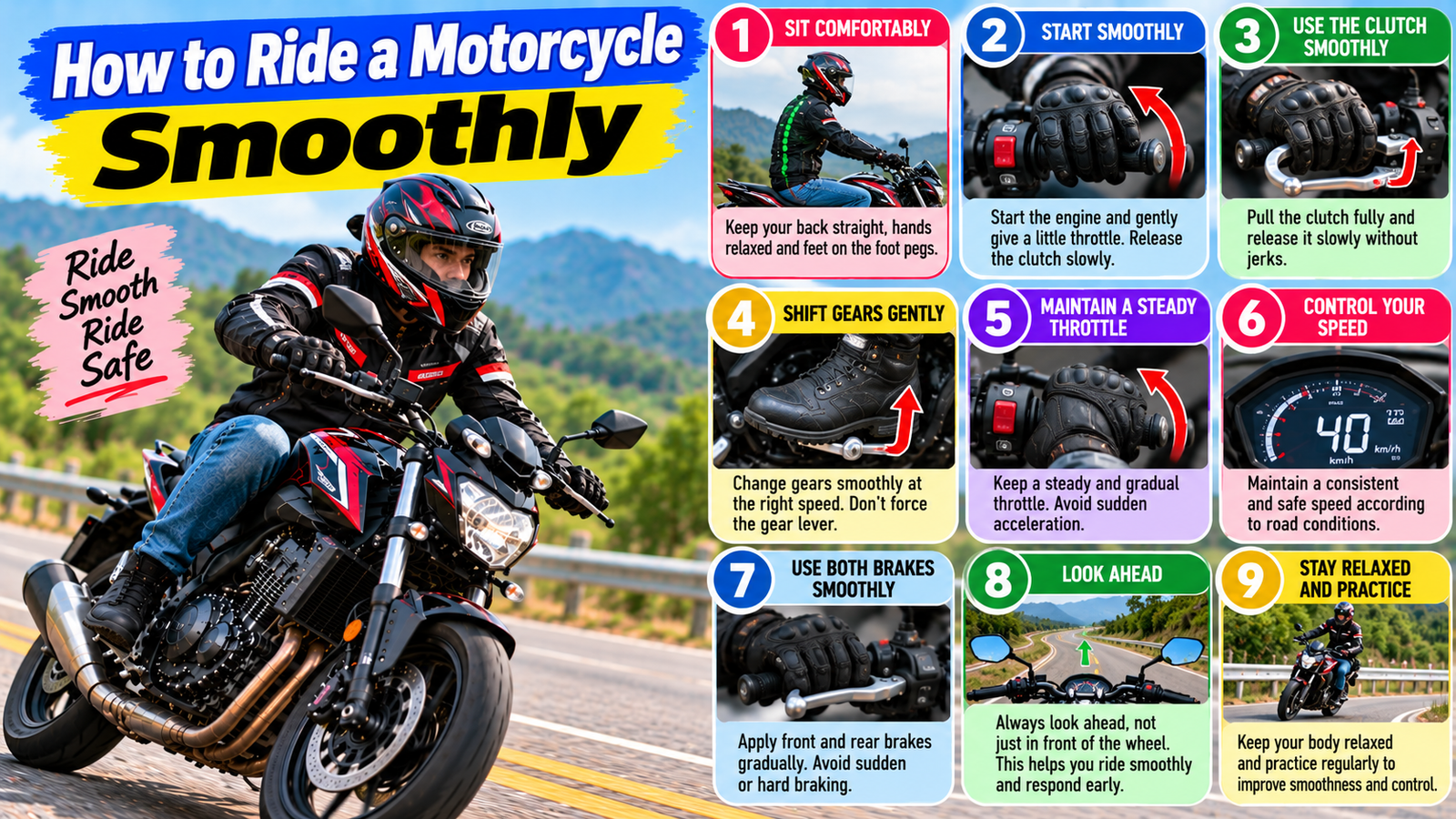
Learning how to ride a motorcycle smoothly can make a major difference in comfort, control, and confidence. In my opinion, smooth riding is not about riding slowly. It is about making controlled movements and avoiding unnecessary sudden changes in speed, direction, or braking.
A smooth motorcycle rider understands how the throttle, clutch, brakes, gears, and body position work together. With practice, these actions become more natural and require less conscious effort.
Start With Smooth Throttle Control
The throttle is one of the most important controls for smooth motorcycle riding.
Sudden throttle movements can cause abrupt acceleration and make the motorcycle feel unsettled. I prefer to open the throttle gradually, especially when starting from a stop or exiting a turn.
Smooth throttle control also helps maintain a consistent speed in traffic.
The more comfortable I become with the throttle, the easier it is to maintain a steady riding style.
Master the Clutch
The clutch plays a major role in smooth acceleration and low speed control.
When starting from a stop, releasing the clutch too quickly can cause the motorcycle to jerk or stall.
I recommend learning where the clutch begins to engage. This area is often called the friction zone.
Practicing clutch control at low speed in a safe location can make slow traffic, parking, and turning much easier.
Change Gears Smoothly
Correct gear selection helps the engine operate comfortably.
If I use a gear that is too high at low speed, the engine may feel weak or struggle. If I remain in a low gear at high speed, the engine may run at unnecessarily high RPM.
Smooth gear changes involve coordinating the throttle, clutch, and gear selector.
With practice, shifting becomes a natural movement rather than something I have to think about constantly.
Brake Progressively
Smooth braking is another important motorcycle riding skill.
Instead of suddenly applying maximum braking during normal riding, I prefer progressive braking that matches the situation.
The front and rear brakes should be used appropriately, with the amount of pressure depending on speed and road conditions.
Emergency braking is different from normal braking and should be practiced in a controlled environment.
Look Ahead
Looking farther down the road helps make riding smoother.
When I can see traffic slowing, a turn approaching, or an obstacle ahead, I can adjust speed gradually instead of reacting suddenly.
Good observation reduces the need for unnecessary braking and acceleration.
This is one reason experienced riders often appear calm even in changing traffic.
Maintain a Consistent Speed
Constantly changing speed can make riding uncomfortable.
I prefer to maintain a steady speed when road and traffic conditions allow.
However, consistency should never be more important than safety. If traffic slows or conditions change, speed should be adjusted accordingly.
Smooth riding means adapting gradually whenever possible.
Use Proper Body Position
Body position can influence motorcycle control.
I try to remain relaxed rather than gripping the handlebars tightly.
The hands should control the motorcycle without unnecessary tension. The body should remain balanced and prepared for changes in direction.
A relaxed riding position can also reduce fatigue during longer journeys.
Avoid Sudden Steering Movements
Motorcycles respond quickly to steering input.
Sudden movements can make the motorcycle feel unstable, particularly at higher speeds.
I prefer smooth steering inputs and controlled cornering.
When approaching a turn, slowing to an appropriate speed before entering the corner can make the turn easier to manage.
Plan Your Riding
Smooth riding begins before an action takes place.
For example, if I know a traffic light is red ahead, I can gradually reduce speed instead of accelerating toward it and braking at the last moment.
Planning gives me more options and reduces unnecessary movements.
This approach is especially useful in busy traffic.
Keep a Safe Distance
A safe following distance allows more time to react.
When I follow too closely, I may have to brake suddenly whenever the vehicle ahead slows.
Maintaining more space allows gradual speed adjustments and gives me a better view of the road.
It also reduces stress because I am not constantly reacting to the vehicle directly ahead.
Practice Slow Speed Control
Smooth motorcycle riding is not only about high speed.
Low speed control is extremely important for parking, traffic, U turns, and crowded roads.
Practicing clutch control, rear brake use, and gentle throttle input can improve confidence.
A safe practice area is the best place to develop these skills.
Adapt to Road Conditions
Smooth riding requires understanding the surface beneath the tires.
Wet roads, gravel, sand, potholes, painted road markings, and uneven surfaces can reduce available traction.
When road conditions change, I reduce speed and avoid unnecessary sudden inputs.
The motorcycle should be controlled according to the grip available.
Stay Relaxed
Riding with excessive tension can make movements less smooth.
I try to keep my arms and shoulders relaxed while maintaining a secure riding position.
A relaxed rider is generally better able to make controlled movements and respond to changes in traffic.
Final Thoughts
Learning how to ride a motorcycle smoothly takes practice, but the basic principles are straightforward.
I focus on smooth throttle control, proper clutch use, progressive braking, appropriate gear selection, relaxed body positioning, good observation, and planning ahead.
Smooth motorcycle riding improves comfort and control while reducing unnecessary stress on the rider and motorcycle.
From my perspective, the best way to develop this skill is to practice regularly without rushing. The goal is not simply to make the motorcycle look smooth. The goal is to make every movement controlled, predictable, and appropriate for the road conditions.