Cold weather can make motorcycle riding feel completely different. Lower temperatures affect the rider, the motorcycle, road conditions, and overall comfort. For this reason, I believe cold weather motorcycle riding requires more preparation than simply wearing a thicker jacket.
When temperatures drop, the goal should be to stay warm without sacrificing movement or concentration. Good preparation can make cold weather riding much safer and more enjoyable.
Wear Layers
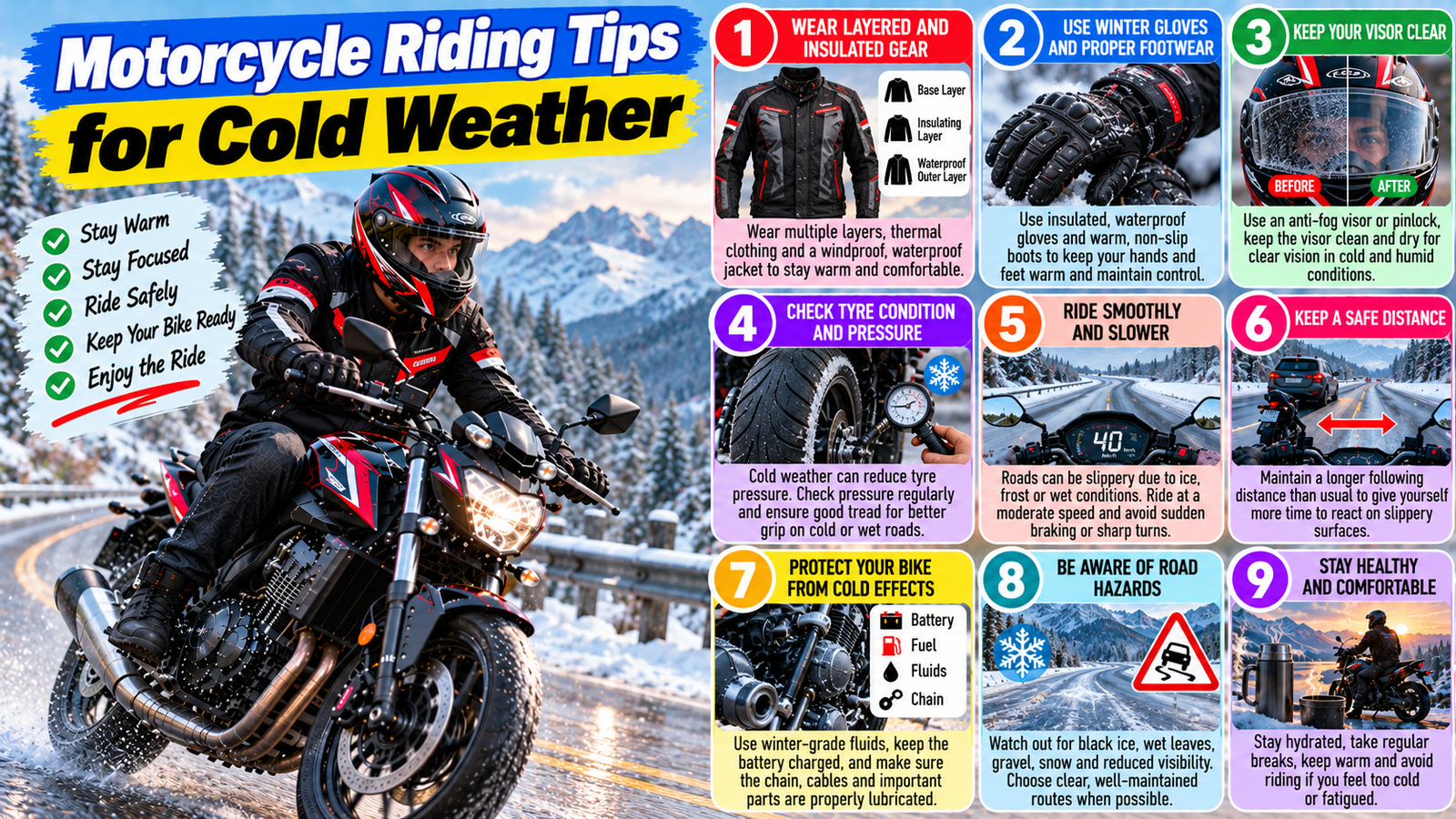
One of my favorite ways to prepare for cold weather motorcycle riding is using layers.
Instead of wearing one extremely thick piece of clothing, several suitable layers allow you to adjust your clothing according to the temperature.
A base layer can help manage moisture, while an insulating layer provides warmth. Your outer riding gear can then provide protection from wind and weather.
The important thing is to avoid clothing that restricts your ability to operate the motorcycle.
Protect Your Hands
Cold hands can become a serious problem for motorcycle riders.
When your fingers become very cold, they may feel stiff or less sensitive. This can make it harder to operate the controls comfortably.
Good quality motorcycle gloves designed for colder conditions can help.
If your motorcycle has heated grips, they can also provide additional comfort.
Never compromise your ability to control the motorcycle simply to keep your hands warm.
Protect Your Head and Neck
A helmet protects your head, but cold air can still make your neck and face uncomfortable.
A suitable neck covering can help reduce cold airflow.
Make sure any additional clothing fits properly and does not interfere with your helmet or visibility.
Your helmet visor should also remain clear so you can see the road properly.
Check Tire Condition
Cold temperatures can affect tire behavior.
Before riding, check tire pressure according to your motorcycle manufacturer’s recommendations.
Inspect the tires for damage and excessive wear.
During cold weather, remember that tires may require some time and normal riding conditions to reach their typical operating behavior. This does not mean you should ride aggressively to warm them up.
Instead, ride smoothly and give yourself time to adapt.
Be Careful on Wet or Icy Roads
Cold weather can create dangerous road conditions.
Water can remain on the road longer in some environments, and temperatures near freezing can create slippery surfaces.
If there is a possibility of ice, frost, snow, or other dangerous conditions, carefully reconsider whether riding is appropriate.
Motorcycles provide less stability margin than cars on extremely slippery surfaces.
Allow Extra Braking Distance
Cold and wet conditions can affect traction.
For this reason, I recommend leaving more space between your motorcycle and the vehicle ahead.
Avoid sudden braking and maintain smooth control.
The extra distance gives you more time to respond if traffic changes unexpectedly.
Keep Your Body Warm
Staying warm is not only about comfort. It can also affect concentration and physical control.
If you become extremely cold, you may become distracted by discomfort.
Good riding gear should protect your body from wind and cold air.
Pay particular attention to your hands, feet, chest, neck, and face.
Check the Motorcycle Before Starting
Cold weather is a good reason to be more careful with pre ride checks.
Check the battery, lights, tires, brakes, fluids, chain, and controls.
If the motorcycle has difficulty starting, do not repeatedly hold the starter for long periods.
Follow the manufacturer’s recommendations for starting and warming the motorcycle.
Modern motorcycles generally do not require excessive idling simply to warm up. Follow the owner’s manual for your specific model.
Watch the Battery
Cold temperatures can make starting more difficult, especially if the battery is already weak.
If your motorcycle has been sitting unused for a long period, check the battery condition before taking a long trip.
A weak battery can turn into a major problem when you are away from home.
Keep Your Visor Clear
Fogging can become a major visibility problem in cold weather.
A fogged visor can make it difficult to see traffic, road markings, or hazards.
Use a helmet system designed to reduce fogging where appropriate and keep the visor clean.
If visibility becomes poor, slow down and find a safe place to stop if necessary.
Take Breaks
Cold weather can make a long motorcycle ride tiring.
Regular breaks give you an opportunity to warm up, drink something, eat, and check your motorcycle.
If you notice persistent numbness or discomfort, do not simply ignore it.
Take the time to recover before continuing.
Ride Smoothly
Cold weather is not the right time for aggressive riding.
Use smooth throttle control, gentle braking, and controlled steering.
Maintain a reasonable speed and avoid sudden movements.
Your riding style should match the road and weather conditions.
Be Careful With Wind
Wind can make cold temperatures feel much worse.
A strong headwind can increase fatigue and reduce comfort.
Keep a relaxed riding position and avoid unnecessary tension.
If strong winds make the motorcycle difficult to control, reduce speed and consider stopping if conditions become unsafe.
Final Thoughts
Cold weather motorcycle riding can be enjoyable when you prepare properly. The most important things are suitable clothing, warm hands, good visibility, proper motorcycle maintenance, and cautious riding.
I believe every rider should respect cold weather rather than trying to prove they can tolerate it.
If roads become icy, visibility becomes poor, or your body becomes too cold to ride comfortably, stopping is the smart decision.
Good preparation allows you to enjoy the motorcycle while reducing unnecessary risks during colder conditions.