Learning to ride a motorcycle is exciting, but I believe safety should always come before speed or performance. A motorcycle gives you freedom and convenience, but it also requires concentration, good judgment, and proper riding habits. For beginners, developing safe habits from the beginning can make a major difference in confidence and overall riding ability.
When I think about motorcycle safety, I do not consider it a single rule. It is a combination of proper equipment, motorcycle maintenance, road awareness, responsible speed, and good decision making. Even experienced riders can make mistakes, so beginners should focus on building habits that reduce unnecessary risks.
Always Wear a Proper Helmet
The helmet is one of the most important pieces of motorcycle safety equipment. I would never recommend riding without a properly fitted helmet.
A good helmet should fit securely without being painfully tight. It should also be appropriate for motorcycle use and meet the safety standards required in your area.
I believe wearing a helmet should become automatic. It should not matter whether you are traveling a short distance or going on a long ride.
Wear Protective Riding Gear
A helmet is important, but it is not the only protective equipment.
I would also recommend motorcycle gloves, protective clothing, proper riding shoes or boots, and suitable pants. Motorcycle specific gear is designed to provide more protection than ordinary clothing.
Protective equipment may feel unnecessary during a short ride, but accidents can happen unexpectedly.
Learn to Control the Motorcycle
Before riding in busy traffic, beginners should become comfortable with basic controls.
I would practice starting, stopping, turning, changing gears, using the clutch, and braking in a quiet and safe area.
The goal is to make these actions feel natural. When basic controls become automatic, you can concentrate more on traffic and road conditions.
Understand Proper Braking
Braking is an important motorcycle riding skill.
I recommend learning how both brakes work and practicing smooth braking at different speeds in a safe environment.
Avoid grabbing the brakes suddenly unless an emergency requires immediate action. Smooth and controlled braking can help maintain stability.
If your motorcycle has ABS, understand how the system works and still practice good braking technique.
Follow Speed Limits
Speed is one of the easiest things for a new rider to underestimate.
A motorcycle can feel stable and exciting at higher speeds, but the amount of time available to react becomes smaller as speed increases.
I prefer riding at a speed that allows me to observe the road, identify hazards, and respond calmly.
Following posted speed limits is an important part of responsible riding.
Keep a Safe Following Distance
I always believe riders should maintain enough space between their motorcycle and the vehicle ahead.
Cars can stop suddenly, and traffic conditions can change quickly.
A safe following distance gives you more time to react if the vehicle in front brakes unexpectedly.
The faster you travel, the more important adequate following distance becomes.
Stay Visible
Motorcycles are smaller than cars, which can make them harder for other road users to notice.
I try to position myself where I am visible to surrounding traffic and avoid riding in another vehicle’s blind spot for extended periods.
Using headlights appropriately and making clear signals can also help communicate your intentions.
Check Your Mirrors Regularly
Mirrors provide important information about what is happening behind you.
I recommend developing a habit of checking mirrors regularly without becoming distracted from the road ahead.
Before changing lanes or making a significant movement, I would check the surrounding traffic and use the appropriate indicator.
Watch the Road Surface
Motorcycle riders are more affected by road conditions than drivers in enclosed vehicles.
Potholes, loose gravel, wet surfaces, oil, sand, painted lines, and uneven pavement can affect traction and stability.
I always recommend scanning the road ahead and adjusting speed when conditions change.
Be Extra Careful in Bad Weather
Rain can make roads slippery and reduce visibility.
If you must ride in wet weather, reduce speed, increase following distance, and make smoother inputs.
If weather conditions become severe, I would rather stop somewhere safe than continue simply because I want to reach my destination quickly.
Maintain Your Motorcycle
Motorcycle safety is also connected to maintenance.
I would regularly check tire pressure, tire condition, brakes, lights, chain condition, engine oil, and other important components.
A well maintained motorcycle is easier to control and less likely to develop preventable problems.
Avoid Distractions
Riding requires your full attention.
I would never use a phone while riding. Looking away from the road for even a short moment can have serious consequences.
Before starting the motorcycle, make sure everything you need is secure and ready.
Never Ride Under the Influence
Alcohol, drugs, and certain medications can affect reaction time, coordination, and judgment.
I believe riding under the influence is never worth the risk.
If you are not in a suitable condition to ride, choose another transportation option.
Practice Defensive Riding
Defensive riding means expecting that other road users may make mistakes.
I try not to assume that every driver has seen me or will follow the rules perfectly.
Keeping an escape route, maintaining space, and observing surrounding traffic can help reduce unnecessary risks.

Final Thoughts
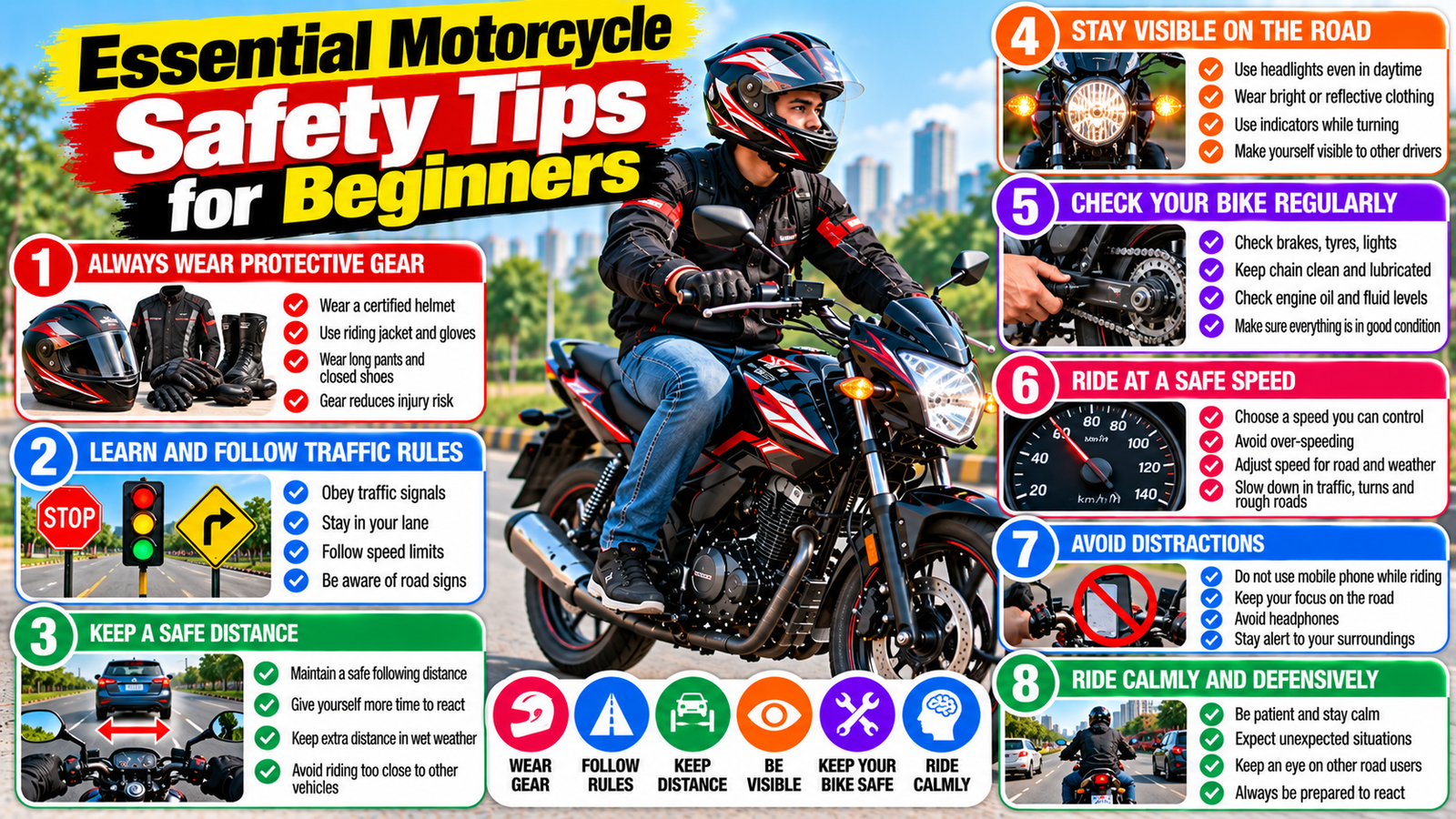
Essential motorcycle safety for beginners starts with simple habits. Wear proper protective equipment, learn your motorcycle’s controls, maintain a safe speed, keep enough distance, stay visible, watch the road surface, and remain focused.
In my opinion, becoming a safe motorcycle rider is more important than becoming a fast rider. Good habits developed during the early stages of riding can stay with you for years.
The goal of motorcycle riding should not simply be reaching your destination quickly. It should be reaching your destination safely and returning home in the same condition.