Long distance motorcycle riding can be one of the most enjoyable ways to travel. I like the feeling of being on the open road, but longer rides require more preparation than a short daily commute.
When riding for several hours, fatigue, weather, road conditions, motorcycle maintenance, and changing traffic can all become important factors.
In my opinion, successful long distance motorcycle riding begins before the engine is even started.
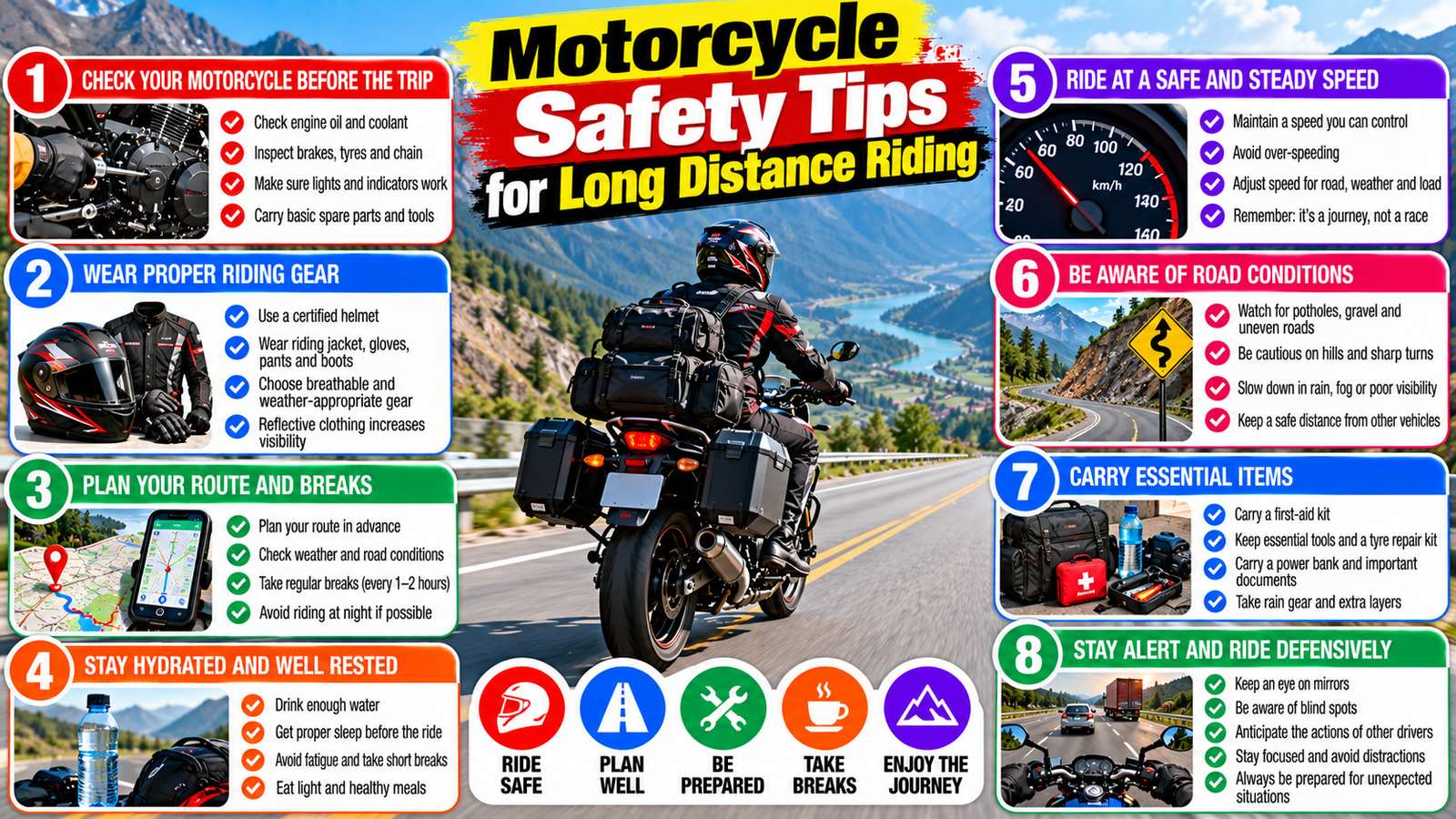
Inspect the Motorcycle Before the Trip
Before a long ride, I would perform a complete basic inspection.
Check the tires, tire pressure, brakes, lights, engine oil, chain, battery, and fuel level.
A small mechanical issue that seems unimportant near home can become a major problem when you are far away.
Plan Your Route
I recommend planning the route before leaving.
Know where fuel stations, rest areas, food stops, and other useful locations are available.
I also check the expected road conditions and weather when possible.
Having a basic plan does not mean every minute of the trip needs to be scheduled. It simply gives you options if something changes.
Get Enough Sleep
Fatigue can seriously affect riding ability.
Before a long trip, I make sure I am properly rested.
I would never consider starting a long motorcycle ride after a night of poor sleep if I already feel tired.
Being alert is one of the most important safety requirements for long distance riding.
Wear Comfortable Protective Gear
Long rides require gear that provides protection without creating excessive discomfort.
A helmet should fit correctly, while gloves and suitable protective clothing should allow comfortable movement.
I also consider weather conditions when choosing clothing.
Take Regular Breaks
One of the biggest mistakes during long rides is trying to continue without enough breaks.
I prefer stopping regularly to stretch, drink water, eat when needed, and refresh my attention.
A short break can make a major difference in how alert you feel.
Stay Hydrated
Dehydration can contribute to tiredness and reduced concentration.
I keep water available and drink regularly, especially during hot weather.
Long rides in warm conditions can make hydration particularly important.
Do Not Ignore Fatigue
If I begin feeling sleepy, mentally slow, or physically uncomfortable, I consider that a warning.
I would rather stop and rest than try to push through fatigue.
There is no benefit in arriving early if the journey becomes unnecessarily dangerous.
Monitor the Weather
Weather can change during a long trip.
Before leaving, I check the expected conditions and prepare appropriate clothing.
If heavy rain or severe weather develops, I adjust my speed and route or stop when necessary.
Maintain a Safe Speed
Long distance riding can make riders comfortable enough to gradually increase speed.
I try to avoid this.
Maintaining a reasonable speed gives me more time to react to road conditions and reduces fatigue.
Keep a Safe Following Distance
Open roads can sometimes encourage riders to follow vehicles too closely.
I maintain enough space to respond if the vehicle ahead brakes suddenly.
This is especially important when following trucks or other large vehicles that can block your view.
Be Careful With Overtaking
Overtaking requires good judgment.
I only overtake when there is enough visibility, space, and legal opportunity.
I never assume that another vehicle will behave exactly as expected.
Check Fuel Regularly
I keep an eye on fuel levels during long trips.
Instead of waiting until the tank is almost empty, I prefer planning fuel stops ahead of time.
This becomes especially important on unfamiliar roads where fuel stations may be far apart.
Secure Your Luggage
If you carry luggage, make sure it is securely attached.
Loose luggage can shift the motorcycle’s balance or fall onto the road.
I also avoid carrying unnecessary weight.
Keep Emergency Essentials
For longer trips, I like to carry basic emergency supplies appropriate for the journey.
Depending on the motorcycle and route, this can include basic tools, a tire repair solution, a phone, identification, water, and other useful items.
The exact equipment depends on the motorcycle and the trip.
Know Your Motorcycle
Before a long journey, I recommend being familiar with your motorcycle’s controls and normal behavior.
If you know how your motorcycle normally feels, unusual vibration, sound, or handling can be easier to recognize.
Avoid Riding When Sick or Exhausted
Long distance riding requires concentration.
If you are sick, extremely tired, or otherwise unable to focus properly, I would postpone the trip if possible.
Final Thoughts
Long distance motorcycle riding should be enjoyable, but safety requires preparation.
I focus on motorcycle inspection, route planning, proper rest, hydration, protective gear, regular breaks, fuel planning, safe speed, and weather awareness.
The most important lesson I have learned is that there is no need to rush a long motorcycle journey. Taking your time can make the ride more comfortable and give you more opportunities to respond to unexpected situations.
A successful long ride is not measured by how quickly you finish it. It is measured by how safely and comfortably you complete the journey.