Learning how to use motorcycle brakes properly is one of the most important skills for any rider.
Braking is not simply about stopping the motorcycle. Good braking technique involves controlling speed, maintaining stability, anticipating traffic, and responding to unexpected situations.
I believe beginners should spend time understanding their motorcycle’s braking system and practicing in a safe environment.
Understand Your Two Brakes
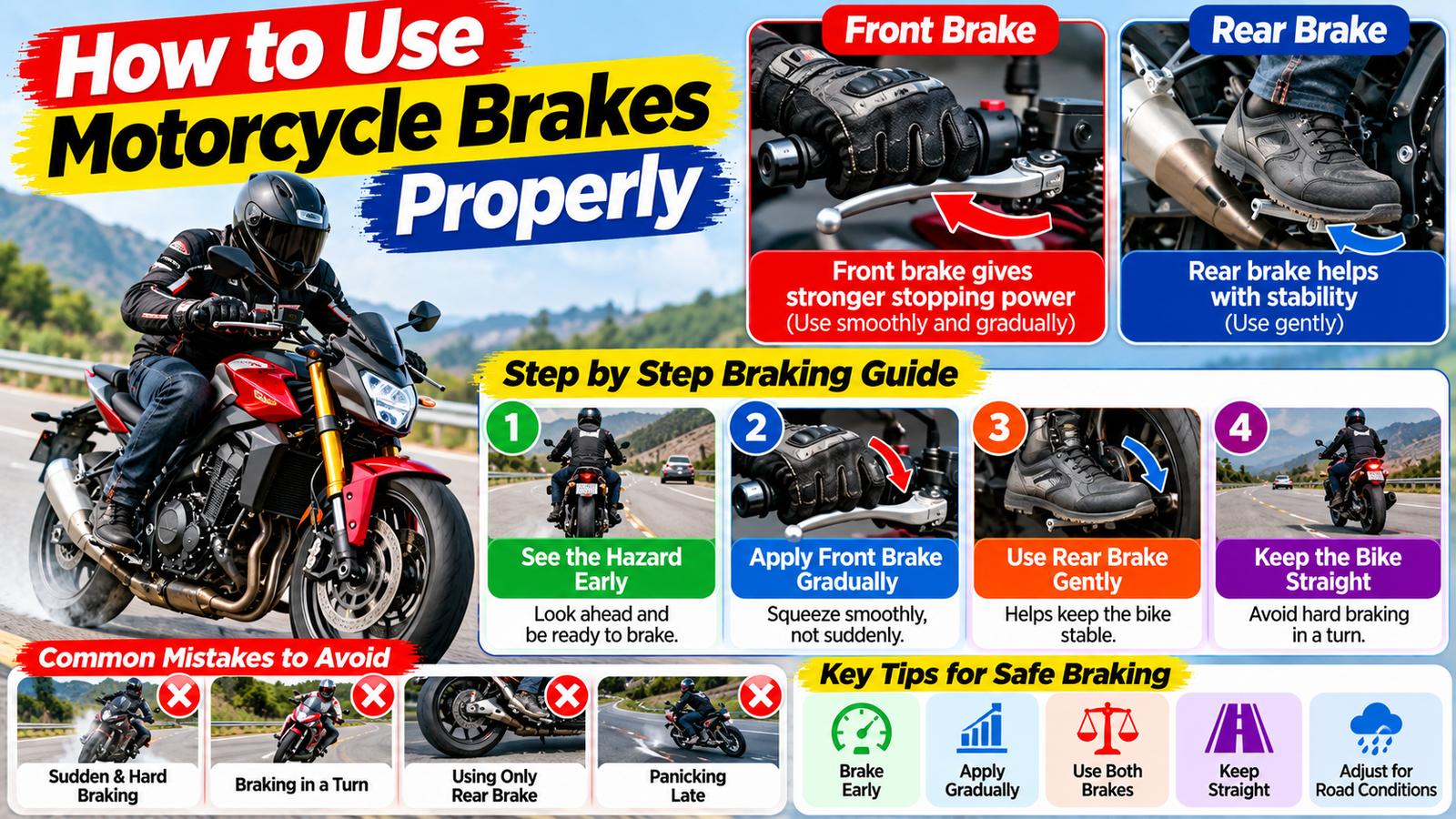
Most motorcycles have separate front and rear brakes.
Both contribute to stopping the motorcycle, but they may behave differently.
I recommend learning how your motorcycle responds to each brake instead of assuming they work exactly like the brakes on another motorcycle.
Use Smooth Brake Inputs
Sudden braking can make a rider lose confidence.
I prefer applying the brakes progressively and smoothly.
In normal conditions, controlled brake pressure allows the motorcycle to slow down predictably.
The Front Brake Is Important
The front brake generally provides a significant portion of a motorcycle’s stopping power because weight transfers toward the front during braking.
This does not mean the rear brake should be ignored.
The important lesson is to understand how both brakes work together.
Do Not Depend Only on the Rear Brake
Some beginners are afraid of using the front brake and rely too heavily on the rear.
This can reduce braking effectiveness.
I recommend learning proper use of both brakes under safe training conditions.
Avoid Panic Braking
In an emergency, a rider may instinctively grab the brake lever.
This can make the motorcycle respond abruptly.
Practicing emergency braking in a controlled environment can help develop better reactions.
Understand ABS
If your motorcycle has ABS, learn what it does.
ABS can help prevent wheel lock during certain hard braking situations.
However, I would not treat ABS as permission to ride faster or ignore safe following distances.
Technology can support good riding habits, but it cannot replace them.
Look Ahead and Anticipate
Good braking begins with observation.
If I see traffic slowing ahead, I begin preparing early instead of waiting until the last moment.
Anticipation allows smoother braking and reduces unnecessary panic.
Increase Distance in Poor Conditions
Rain, gravel, traffic congestion, and reduced visibility can change braking requirements.
I increase following distance when conditions are difficult.
More space gives me more time to slow down smoothly.
Brake Before a Corner
When possible, I prefer reducing speed appropriately before entering a corner rather than making heavy braking inputs while already turning.
This can help maintain better control.
Every road and situation is different, so riders should always adjust to actual conditions.
Keep Your Motorcycle Maintained
Proper braking technique cannot compensate for worn brake components.
I regularly pay attention to brake pads, discs, fluid, lines, and other components according to the motorcycle manufacturer’s maintenance requirements.
If braking feels unusual, I would have the motorcycle inspected.
Pay Attention to Brake Feel
If the brake lever suddenly feels different, becomes unusually soft, or requires significantly more movement, I would not ignore it.
Changes in brake feel can indicate a maintenance issue.
A qualified mechanic should inspect serious or unexplained braking problems.
Practice in a Safe Area
Braking skills improve through practice.
I recommend beginners practice gradual stops and controlled emergency braking in a suitable open area away from traffic.
Start slowly and develop confidence progressively.
Avoid Braking Aggressively on Slippery Surfaces
Road surfaces can change quickly.
Paint, metal covers, gravel, sand, oil, and wet surfaces may provide less grip.
I try to maintain smooth control when braking over uncertain surfaces.
Final Thoughts
Using motorcycle brakes properly requires understanding, practice, and good judgment.
I focus on smooth braking, proper use of both brakes, adequate following distance, early observation, and regular maintenance.
The goal is not simply to stop as quickly as possible. The goal is to slow down and stop while maintaining control of the motorcycle.
Good braking skills can give a rider more confidence, but they should always be combined with safe speeds and responsible road awareness.