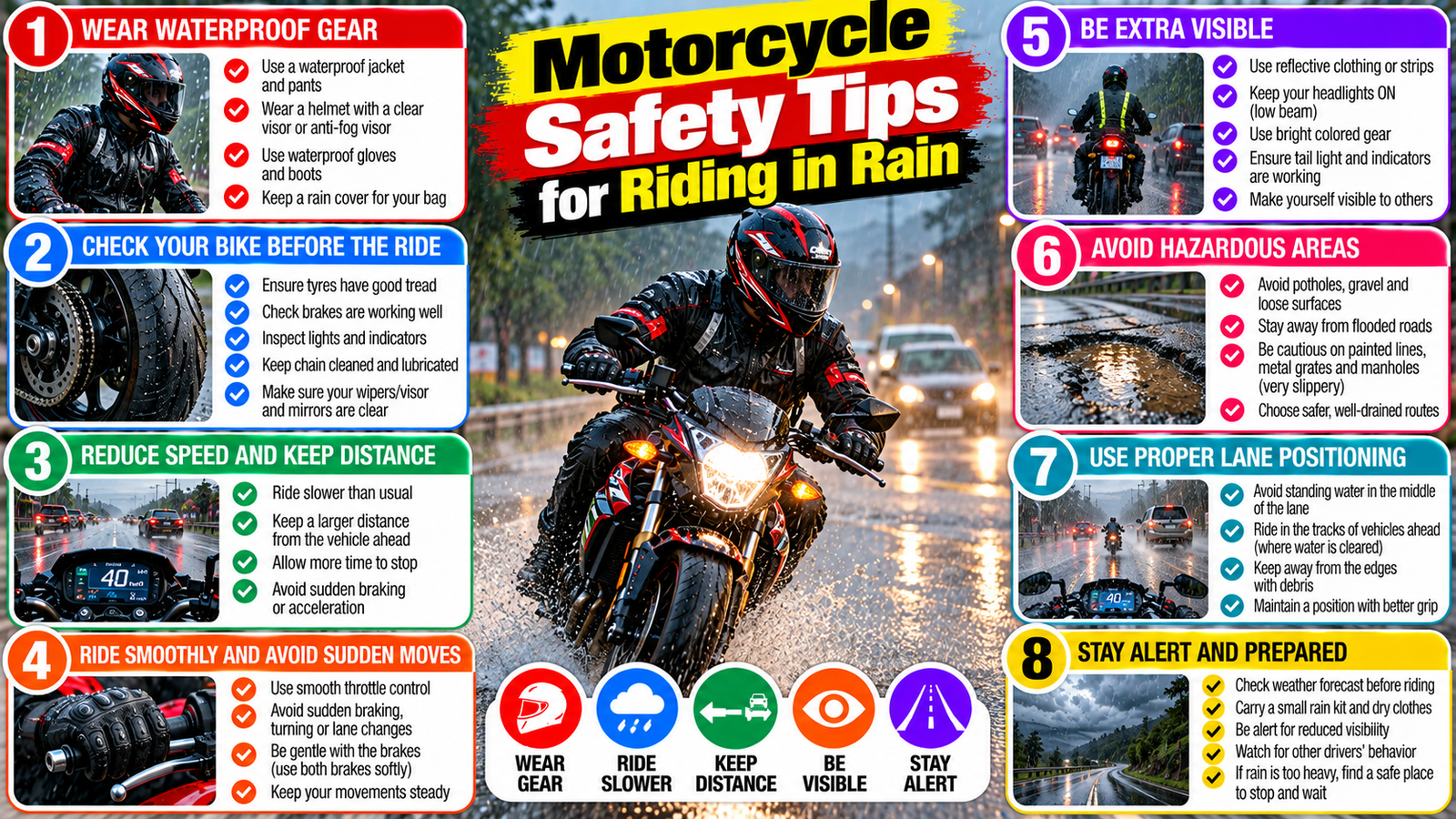
Riding a motorcycle in rain can be challenging because water affects visibility, road grip, braking, and overall handling. I believe riders should treat wet weather seriously rather than assuming that normal riding techniques will work exactly the same way.
Sometimes rain begins unexpectedly when you are already on the road. In that situation, the goal is not to panic. The goal is to reduce risk, remain smooth, and find a safe place to stop if conditions become too difficult.
Check the Weather Before Riding
If I know that rain is expected, I check the weather before starting a long ride.
This helps me decide whether the journey is necessary and whether I need suitable rain protection.
Sometimes postponing a ride is the safest decision, especially when severe weather is expected.
Wear Proper Rain Protection
Getting soaked can make a rider uncomfortable and distracted.
I recommend suitable waterproof motorcycle clothing when riding in wet weather.
A waterproof jacket, pants, gloves, and appropriate footwear can help keep you comfortable.
Check Your Tires
Tire condition becomes especially important in rain.
Good tires with suitable tread can help move water away from the contact area.
Before riding, I check tire condition and pressure according to the manufacturer’s recommendations.
Reduce Your Speed
Wet roads can provide less traction than dry roads.
I reduce speed when riding in rain because this gives me more time to react and allows smoother control.
Speed should always be appropriate for the road and weather conditions.
Increase Following Distance
I increase my following distance in wet conditions.
Vehicles may take longer to stop, and visibility may be reduced.
Extra space gives me more time to react if traffic changes suddenly.
Brake Smoothly
Sudden braking can be more difficult on wet surfaces.
I try to apply the brakes progressively and maintain smooth control.
If your motorcycle has ABS, understand how it operates, but do not use the technology as an excuse to ride aggressively in wet conditions.
Accelerate Smoothly
Sudden acceleration can affect traction.
I use gentle throttle inputs when the road is wet.
Smooth control is especially important when starting from a stop or accelerating through a turn.
Be Careful With Road Markings
Painted road markings can sometimes become slippery when wet.
I try to avoid making sudden movements while riding over painted lines.
The same applies to metal covers and other smooth surfaces that may provide less grip when wet.
Watch for Standing Water
Large puddles can hide potholes or other road problems.
I slow down when approaching standing water and avoid riding through deep or unknown water when possible.
If you cannot see the road surface underneath the water, it is difficult to know what you are entering.
Be Careful During the First Rain
After a long dry period, the first rain can make roads particularly unpredictable because dirt, dust, oil residue, and other substances may mix with water.
I become especially cautious during the beginning of rainfall.
Improve Your Visibility
Rain can make it harder for other drivers to see motorcycles.
I use the motorcycle’s required lights and wear visible protective clothing.
I also avoid staying in vehicle blind spots.
Keep Your Visor Clear
A fogged or water covered visor can seriously reduce visibility.
I keep my visor clean and use suitable anti fog measures when necessary.
If visibility becomes too poor, I would stop in a safe location rather than continue blindly.
Avoid Sudden Steering
Wet conditions are not the time for unnecessary sharp movements.
I keep steering inputs smooth and controlled.
This is especially important when cornering or avoiding road hazards.
Watch for Aquaplaning
At higher speeds, tires can potentially lose contact with the road surface when traveling through significant amounts of water.
Reducing speed and maintaining good tire condition can help reduce this risk.
Know When to Stop
Sometimes the safest option is to stop.
If rain becomes extremely heavy, visibility becomes poor, or the road becomes unsafe, I would find a suitable sheltered location and wait for conditions to improve.
Arriving late is better than taking unnecessary risks.
Final Thoughts
Motorcycle safety in rain depends on preparation, smooth control, reduced speed, good tires, increased following distance, and careful observation.
I never treat wet weather exactly like dry weather. I give myself more space and more time to react.
The most important lesson is to remain calm. Rain does not automatically make motorcycle riding impossible, but it does require a more careful approach.